




What's Happening?
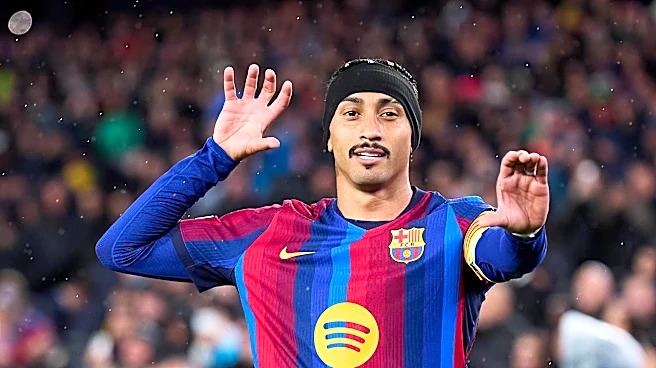
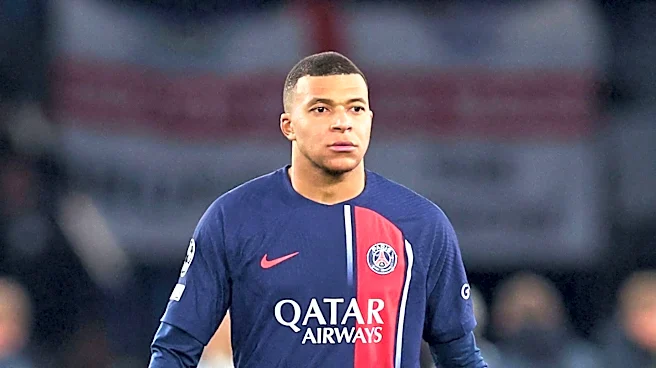
Paris Saint-Germain (PSG) has decided not to recruit a new left winger during the upcoming winter transfer window, despite star player Khvicha Kvaratskhelia suffering a severe anterior cruciate ligament (ACL) injury on October 20 against FC Barcelona.
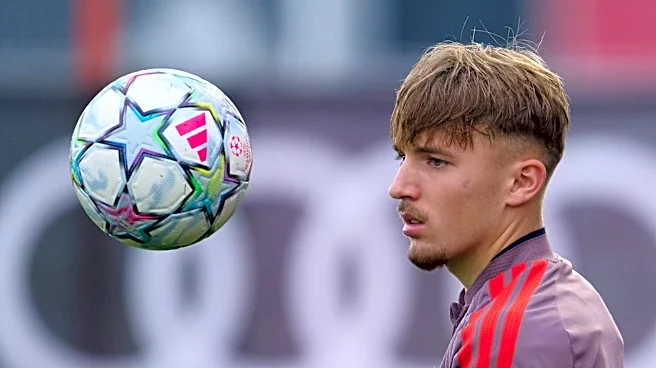
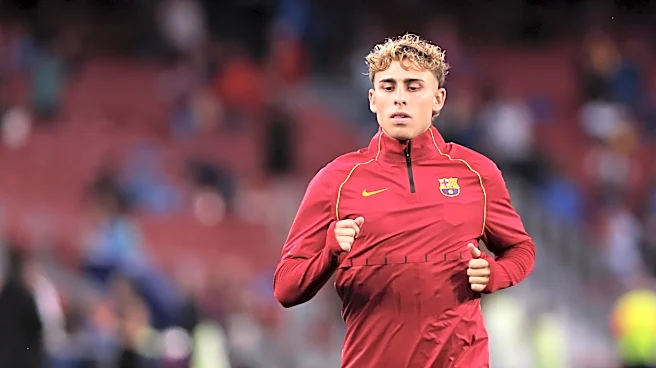
Kvaratskhelia's injury is expected to sideline him for the remainder of the season. This decision, reported by journalist Olivier Tallaron, indicates PSG's confidence in its current offensive squad. The club's management believes that existing players, including summer recruits Mika Godts and Maghnes Akliouche, along with others like Désiré Doué and Ferran Torres, can adequately cover Kvaratskhelia's absence. The club's stance is that a new signing will only be considered if another major offensive player sustains a significant injury.
Why It's Important?
This decision by PSG carries significant implications for the team's strategy and the development of its younger players. By choosing not to enter the transfer market, PSG is signaling a strong belief in the depth and versatility of its current roster. This approach could provide valuable playing time and development opportunities for emerging talents like Mika Godts and Maghnes Akliouche, allowing them to integrate more deeply into Luis Enrique's tactical system. However, it also places increased pressure on the existing squad to maintain high performance levels, particularly in demanding European competitions, without a key offensive threat. The success or failure of this strategy could influence future transfer policies and the club's reliance on internal solutions versus external acquisitions.
What's Next?
PSG will proceed with its current squad for the remainder of the season, relying on internal solutions to compensate for Kvaratskhelia's absence. Young players such as Mika Godts and Maghnes Akliouche are expected to see increased playing time, offering them opportunities to further develop and prove their capabilities within Luis Enrique's system. The club's performance in upcoming matches, especially in the Champions League, will be a critical test of this strategy. Should the team face further significant injuries to key offensive players, PSG's management may reconsider its position and potentially explore options in the transfer market, although this is currently deemed unlikely.
Beyond the Headlines
The decision to forgo a winter transfer despite a major injury highlights a broader trend in top-tier football clubs: balancing immediate competitive needs with long-term squad development. By trusting its existing talent, PSG is not only managing its finances but also fostering a culture of internal growth and resilience. This approach could serve as a model for other clubs facing similar dilemmas, emphasizing the importance of squad depth and the strategic integration of youth players. The long-term success of this strategy could redefine how elite clubs manage player injuries and transfer windows, potentially shifting focus from immediate, high-cost replacements to nurturing in-house talent.