
What's Happening?
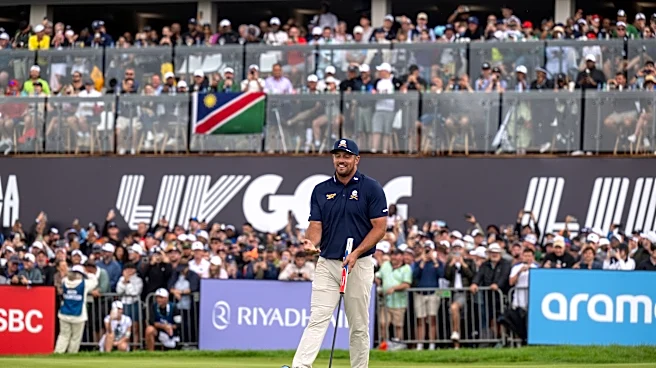
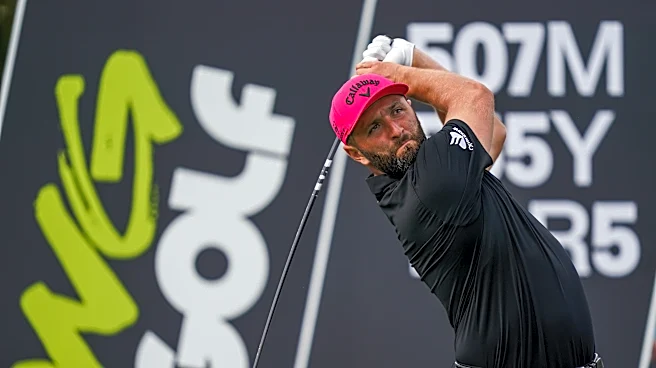
Thomas Pieters, a professional golfer from Belgium, has reconsidered his earlier statement about retiring from professional golf if the LIV Golf League were to fold. The future of LIV Golf is currently
uncertain, with reports of potential bankruptcy, staff layoffs, and financial issues affecting players. Pieters initially expressed his readiness to retire following news of the Public Investment Fund (PIF) withdrawing its support for the tour. However, he now plans to return to the DP World Tour and aims to participate in the 2028 Olympics if LIV Golf ceases operations. Pieters, who joined LIV Golf in 2023 and plays for Dustin Johnson's 4Aces GC, has six DP World Tour wins, including the 2022 Abu Dhabi HSBC Championship.
Why It's Important?
The uncertainty surrounding LIV Golf has significant implications for the professional golf landscape. If the league folds, it could lead to a reshuffling of players back to traditional tours like the DP World Tour and the PGA Tour. This situation highlights the financial instability and risks associated with new ventures in professional sports. For players like Pieters, the potential collapse of LIV Golf necessitates contingency plans, impacting their career trajectories and financial security. The situation also underscores the importance of strategic alliances, as seen with the Asian Tour's deal with the DP World and PGA Tours, which aims to secure their future in a competitive market.
What's Next?
Pieters and other players are awaiting further developments regarding LIV Golf's future. A player meeting is scheduled, where more information may be disclosed. If LIV Golf cannot secure its future, Pieters plans to return to Europe, possibly through Q school or the Challenge Tour. The broader golf community will be closely watching how LIV Golf navigates its financial challenges and whether it can sustain its operations. The outcome will influence player decisions and the competitive dynamics of professional golf tours globally.
Beyond the Headlines
The situation with LIV Golf reflects broader themes in professional sports, such as the balance between innovation and financial sustainability. The league's challenges highlight the risks of rapid expansion without secure funding. Additionally, the scenario emphasizes the need for players to prioritize their long-term career stability over short-term gains. The potential collapse of LIV Golf could also lead to a reevaluation of how new sports leagues are structured and funded, influencing future ventures in the industry.