






What's Happening?
Georgia and South Carolina have quietly abandoned plans for the Jasper Ocean Terminal, a massive bi-state port project on the Savannah River that was intended to become North America's largest maritime port terminal. The project, conceived two decades
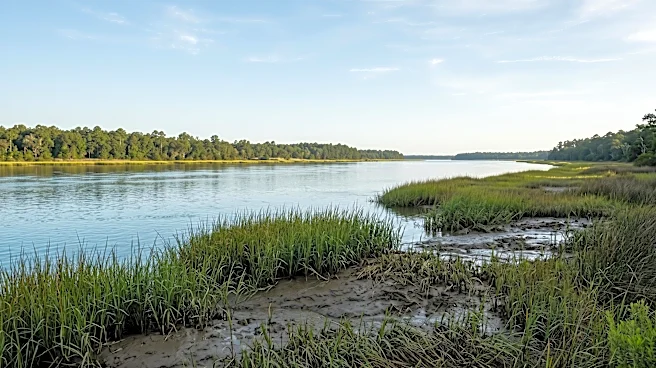
ago, aimed to create enough berth space for 10 container ships and 1,500 acres of land to handle an estimated 7 million container units annually. Despite the initial partnership formed 18 years ago, the rival port authorities of Georgia and South Carolina ultimately prioritized their individual interests, leading to the project's demise. The site, located on the South Carolina bank of the Savannah River, remains largely undeveloped, attracting little attention from the consistent ship traffic passing by, which includes liveaboards, day-trippers, and large cargo vessels serving the Port of Savannah. The shelving of this ambitious project marks the end of a long-standing effort to create a joint mega-port facility.
Why It's Important?
The decision to shelve the Jasper Ocean Terminal project has significant implications for regional economic development and port competition in the Southeastern United States. The terminal was envisioned as a major hub that would have dramatically increased cargo capacity and potentially shifted trade flows, impacting existing ports like Savannah and Charleston. Its failure highlights the challenges of inter-state cooperation on large-scale infrastructure projects, particularly when competing economic interests are at play. For Georgia and South Carolina, the focus will now likely intensify on expanding their existing, independently operated port facilities. The absence of the Jasper Ocean Terminal means that the anticipated economic benefits, such as job creation and increased trade volume associated with such a large facility, will not materialize in the planned bi-state location. This outcome could lead to increased investment in individual port expansions, potentially intensifying competition between the two states for maritime business.
What's Next?
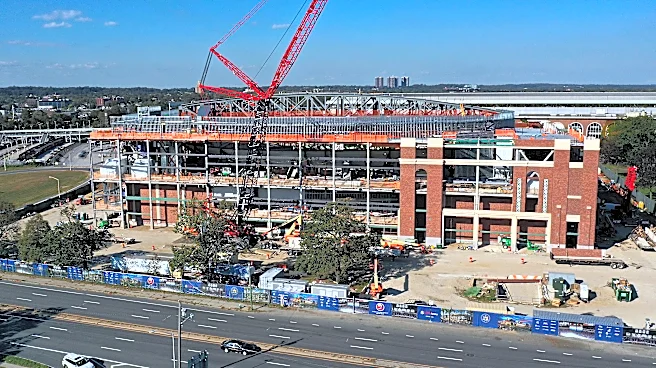
With the Jasper Ocean Terminal project officially shelved, both Georgia and South Carolina are expected to continue focusing on the expansion and modernization of their respective existing port infrastructures. The Georgia Ports Authority recently received approval to build a $2.3 billion container terminal in Savannah, indicating a clear path forward for Georgia's independent port development. Similarly, South Carolina Ports will likely pursue its own expansion strategies for the Port of Charleston. The shelving of the joint project means that future growth in maritime trade for the region will be accommodated through these separate state-run initiatives rather than a unified bi-state effort. This could lead to continued competition for shipping lines and cargo, with each state vying to enhance its capacity and efficiency to attract more business. Stakeholders in the maritime industry will closely watch how these individual port authorities proceed with their expansion plans and how this impacts the overall logistics landscape in the Southeast.
Beyond the Headlines
The abandonment of the Jasper Ocean Terminal project underscores a broader trend of regional economic rivalries often overshadowing collaborative infrastructure development, even when such collaborations promise greater collective benefits. The failure to reconcile the competing interests of the Georgia Ports Authority and South Carolina Ports Authority suggests a deeper institutional challenge in fostering inter-state cooperation on projects of this magnitude. This situation could serve as a case study for future large-scale regional projects, highlighting the need for robust governance structures and clear benefit-sharing mechanisms to overcome inherent competitive dynamics. Furthermore, the decision may prompt a re-evaluation of long-term port development strategies in the U.S. Southeast, potentially leading to more fragmented growth rather than integrated regional planning. The environmental implications of developing two separate, expanded port facilities versus one consolidated mega-port could also become a point of discussion, particularly concerning dredging, habitat impact, and increased traffic in separate waterways.