
What's Happening?
Lithium X2 Mining Inc. has announced the results of its pre-feasibility study (PFS) for the Nevada North Lithium Project, revealing a net present value (NPV) of US$9.8 billion. The study also projects
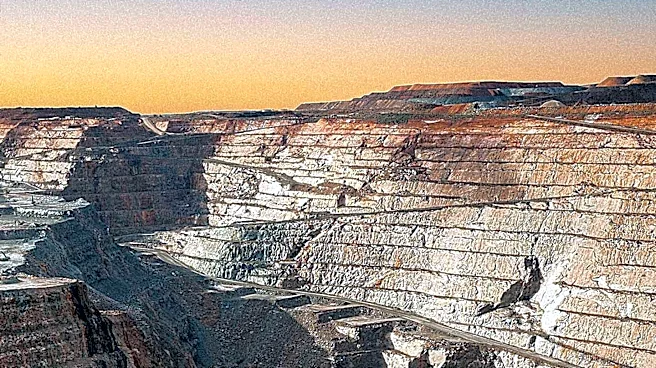
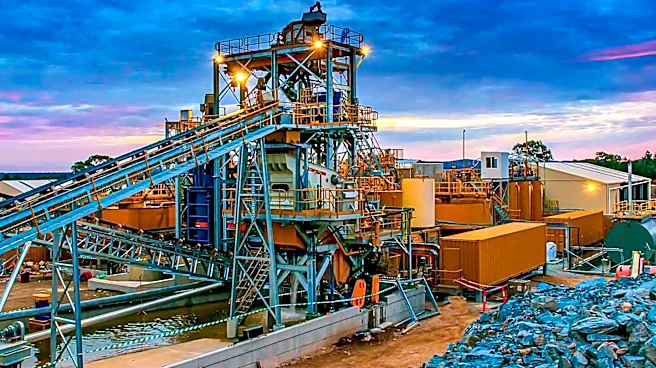
operating costs of approximately US$4,700 per tonne. Greg Reimer, CEO of Lithium X2 Mining, discussed these findings, highlighting the progress at the lithium clay project located in northeastern Nevada, which holds nearly 10 million tons of lithium carbonate equivalent (LCE). The company is also advancing its pilot plant development and optimizing its processing approach. Reimer noted the importance of lithium in the global energy transition, particularly for electric vehicle batteries and battery energy storage systems, despite current market volatility. The company is currently conducting a drilling program to generate material for pilot plant testing and is working to refine its processing flowsheet to further reduce operating costs. The proposed pilot plant will allow for larger-scale testing of the processing flowsheet, integrating individual components after initial bench-scale testing.
Why It's Important?
This announcement is significant for the U.S. energy sector and the broader electric vehicle (EV) industry. A US$9.8 billion NPV for a domestic lithium project signals a substantial potential for local supply of a critical mineral, reducing reliance on foreign sources. The projected operating costs of US$4,700 per tonne suggest a competitive cost structure, which could make U.S.-produced lithium more economically viable. As the U.S. pushes for greater EV adoption and renewable energy storage, securing a stable and cost-effective domestic supply of lithium is crucial for national energy independence and economic security. This project could create jobs, stimulate local economies in Nevada, and contribute to the U.S.'s strategic goal of building a robust domestic supply chain for advanced technologies. The development also positions Lithium X2 Mining as a key player in the evolving battery metals market, potentially attracting further investment and partnerships.
What's Next?
Lithium X2 Mining's immediate next steps involve completing its drilling program to gather material for pilot plant testing and continuing to optimize its processing flowsheet. The company plans to build and operate a pilot plant to test its processing technology on a larger scale, which is a critical step before moving to full-scale commercial production. Success in these stages will be vital for securing further financing and regulatory approvals. The broader lithium market will continue to be monitored for volatility, but Reimer's outlook anticipates stronger demand and potentially tighter market conditions in the medium term, which could favor the project's long-term viability. The company's joint venture with Australian mining company Evolution Mining may also see further developments as the project progresses. Future announcements will likely focus on pilot plant results, further cost optimization, and timelines for commercial production.
Beyond the Headlines
The Nevada North Lithium Project's development highlights the complex interplay between resource extraction, environmental considerations, and technological innovation in the pursuit of a green energy future. While the economic benefits of domestic lithium production are clear, the environmental impact of mining operations, particularly for clay-based lithium deposits, will be a critical factor. This includes water usage, land disturbance, and waste management, which will require careful planning and regulatory oversight. The project also underscores the strategic importance of critical minerals in geopolitical competition, as nations vie for control over essential resources for advanced technologies. The success of such projects will depend not only on economic viability but also on public acceptance and adherence to sustainable practices. Furthermore, the development of efficient and environmentally friendly processing technologies for lithium clay deposits could set new industry standards and influence future mining practices globally.