






What's Happening?
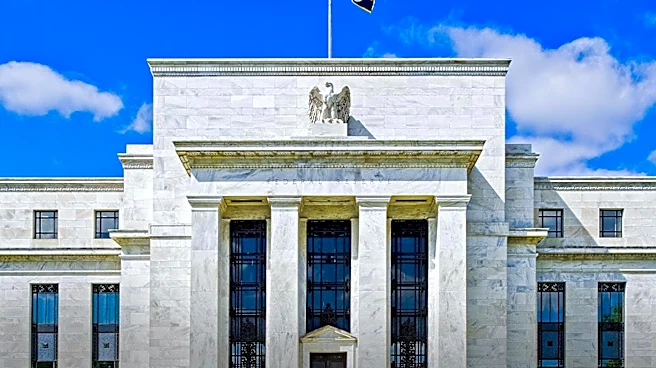
The Federal Reserve Bank of San Francisco has released an analysis indicating a significant shift in the perceived risks to the U.S. economy, moving from demand-side to supply-side factors. Historically, economic risks were primarily driven by demand concerns,
such as low investment and economic growth. However, recent changes in financial market correlations, particularly the stock-bond correlation, suggest a shift towards supply-side risks. This shift is attributed to factors like geopolitical conflicts affecting energy prices, advancements in artificial intelligence, and changes in immigration and tariff policies. The analysis highlights that the stock-bond correlation has turned negative, indicating that supply shocks are now a more prominent risk to economic activity.
Why It's Important?
This shift in economic risk perception has significant implications for U.S. economic policy and financial markets. A supply-driven economy could lead to persistent inflationary pressures, complicating the Federal Reserve's monetary policy decisions. The negative stock-bond correlation suggests that traditional demand-side monetary interventions may be less effective, requiring new strategies to address supply-side challenges. This could impact interest rates, investment strategies, and economic growth forecasts. Additionally, the focus on supply-side risks underscores the importance of addressing structural issues such as energy dependency and supply chain vulnerabilities, which could have long-term effects on economic stability and growth.
What's Next?
As the Federal Reserve continues to monitor these developments, policymakers may need to adapt their strategies to mitigate supply-side risks. This could involve enhancing energy security, revising trade policies, and investing in technologies that improve supply chain resilience. The ongoing geopolitical tensions and their impact on energy prices will likely remain a focal point for economic analysis and policy formulation. The Federal Reserve's future interest rate decisions will be closely watched, as they will reflect the central bank's assessment of these evolving risks and their potential impact on inflation and economic growth.