


What's Happening?
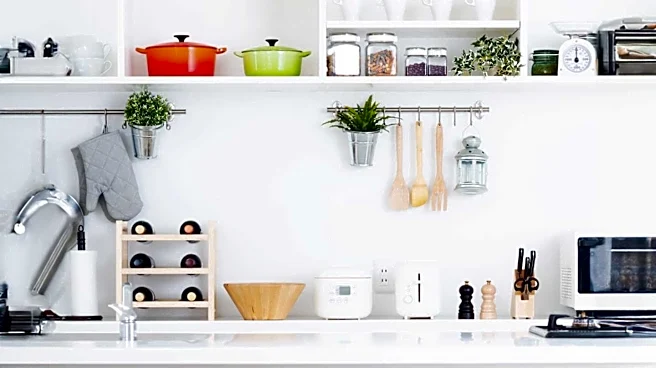
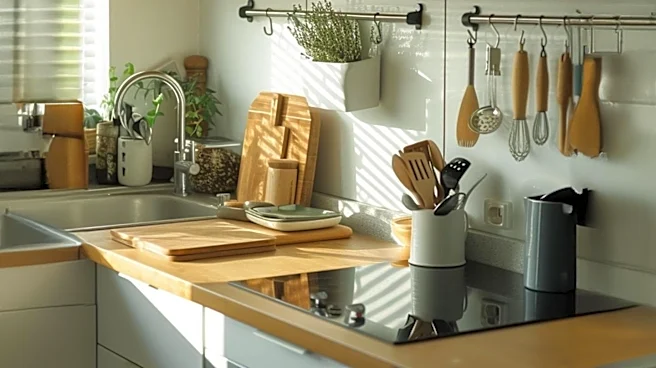
The Marie Kondo method, known for its emphasis on decluttering and keeping only items that 'spark joy,' is being applied to organizing kitchen cookware. This approach involves a thorough decluttering process where all pots and pans are removed from cabinets.
The goal is to identify and discard chipped, non-functional, or duplicate items, making space for cookware that is regularly used and in good condition. After decluttering, the remaining cookware is organized using various tools such as vertical pan racks, horizontal pot organizers, and expandable shelves. For smaller kitchens or limited cabinet space, stacking pans inside one another is suggested, with precautions like placing towels or coffee filters between non-stick pans to prevent damage. The method also recommends utilizing cabinet door space with command hooks for lids or using dish organizer racks for lids and baking trays.
Why It's Important?
Implementing the Marie Kondo method for kitchen cookware organization can significantly impact household efficiency and reduce consumer waste. By encouraging individuals to discard non-essential or damaged items, it promotes a more mindful consumption pattern, potentially leading to fewer impulse purchases and a longer lifespan for existing cookware. For U.S. households, this can translate into more functional kitchen spaces, saving time and frustration associated with searching for specific items. The emphasis on decluttering and strategic organization also aligns with broader trends in home management and sustainability, where consumers are increasingly seeking ways to optimize their living environments and minimize their environmental footprint. This approach can also influence the market for kitchen organization products, driving demand for innovative storage solutions that cater to diverse kitchen layouts and cookware collections.
What's Next?
As the principles of the Marie Kondo method continue to gain traction, it is likely that more households will adopt similar decluttering and organization strategies for various areas of their homes, beyond just the kitchen. This could lead to an increased market for home organization products, including specialized racks, dividers, and storage solutions designed to maximize space and efficiency. Retailers and manufacturers may respond by offering a wider range of products tailored to these organizational needs. Additionally, there might be a growing trend in services offering professional home organization, leveraging methods like KonMari to assist individuals in transforming their living spaces. The focus on intentional ownership and reducing clutter could also influence consumer purchasing habits, with a greater emphasis on quality and utility over quantity.
Beyond the Headlines
The application of the Marie Kondo method to kitchen organization extends beyond mere tidiness; it reflects a deeper cultural shift towards minimalism and intentional living. In a society often characterized by consumerism, this method encourages individuals to critically evaluate their possessions and their emotional connection to them. This can lead to a more conscious approach to consumption, where items are purchased for their utility and the joy they bring, rather than simply accumulating possessions. Ethically, it promotes sustainability by reducing waste and encouraging the donation or resale of usable items. Culturally, it challenges the notion that more possessions equate to more happiness, advocating for a more streamlined and purposeful lifestyle. This philosophical underpinning suggests a long-term shift in how individuals perceive and interact with their material world, potentially influencing broader societal values regarding consumption and environmental responsibility.