




What's Happening?
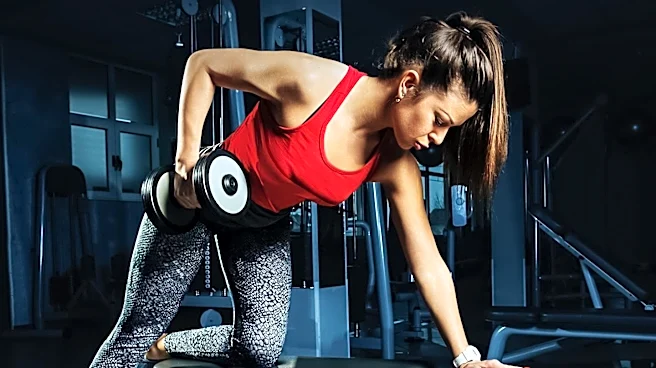
Full-body dumbbell workouts are being highlighted as an effective and accessible method for building muscle and strength, suitable for individuals ranging from beginners to intermediate lifters. These workouts utilize only dumbbells to train all major
muscle groups—legs, chest, back, shoulders, arms, and core—in a single session. The approach emphasizes compound movements like squats, hinges, presses, and rows, which are fundamental for developing strength, stability, and functional fitness. A key principle is progressive overload, where individuals gradually increase weight, repetitions, or sets over time to stimulate muscle adaptation and growth. This method also supports bone health by applying healthy stress to bones, which stimulates bone density, and helps correct muscle imbalances as each side of the body works independently.
Why It's Important?
The promotion of full-body dumbbell workouts has significant implications for public health and fitness accessibility in the U.S. By requiring minimal equipment—often just a pair of dumbbells and a small open space—these workouts remove common barriers to entry for strength training, such as gym memberships or bulky machinery. This accessibility can encourage a broader segment of the population to engage in regular resistance exercise, which is crucial for combating sedentary lifestyles and their associated health risks. The focus on functional movements and muscle balance can lead to improved posture, reduced risk of injury, and enhanced ability to perform daily tasks. For individuals with busy schedules or those preferring to exercise at home, this workout style offers a practical solution to maintain physical health and build strength, contributing to overall well-being and potentially reducing healthcare costs related to preventable conditions.
What's Next?
The increasing popularity and recognition of full-body dumbbell workouts suggest a continued trend towards accessible and home-based fitness solutions. Fitness professionals and online platforms are likely to further develop and disseminate structured programs, such as the described 3-day full-body dumbbell workout plan, to guide individuals through effective training. There will be an ongoing emphasis on proper form and gradual progression to prevent injury and maximize results. Educational content will continue to address common mistakes, such as using incorrect weight or neglecting warm-ups and rest days. As more people adopt these routines, there may be an increased demand for adjustable dumbbells and other compact fitness equipment, influencing the fitness product market. The focus will remain on consistent training and tracking progress to ensure sustained muscle growth and strength development.
Beyond the Headlines
The widespread adoption of full-body dumbbell workouts reflects a cultural shift towards more self-sufficient and adaptable fitness practices. This trend empowers individuals to take greater control over their physical health without relying on traditional gym environments, fostering a sense of autonomy and personal responsibility for well-being. Ethically, it promotes inclusivity in fitness, making strength training viable for diverse populations regardless of their access to specialized facilities or equipment. The emphasis on progressive overload and proper form also instills a disciplined approach to physical activity, highlighting the importance of gradual, sustainable progress over quick fixes. This movement could contribute to a more resilient and health-conscious society, where individuals are equipped with the knowledge and tools to maintain physical strength throughout their lives, impacting long-term health outcomes and societal productivity.