





What's Happening?
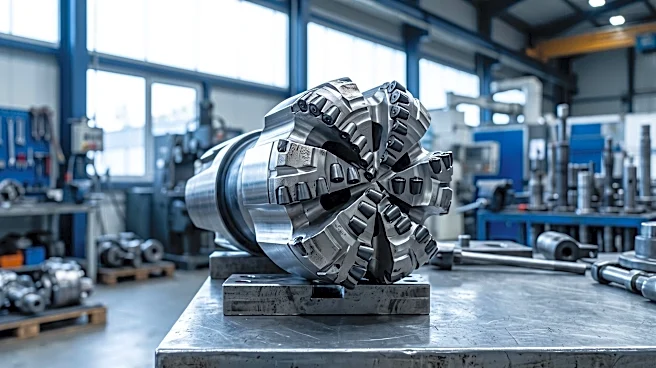
NOV ReedHycalog has developed and deployed Polaris engineered gauge technology, designed to improve directional tracking and stability of polycrystalline diamond compact (PDC) drill bits in longer lateral wells within North American shale plays. Traditional
PDC drill bits often struggle to maintain well trajectory, leading to costly corrective sliding, reduced rate of penetration (ROP), and increased tool wear. The Polaris technology addresses this by managing gauge pad engagement with the wellbore, providing balanced directional control in both rotary and slide drilling modes. In rotary drilling, Polaris maintains two points of contact with the wellbore, enhancing stability and resisting side-cutting. In slide drilling, it shifts to one point of contact, preserving steering response. This optimized configuration aims to reduce bit walk and the need for frequent sliding, allowing for longer rotary intervals and smoother well trajectories. The technology has been deployed in over 230 runs across various North American shale plays, including the Bakken, Permian, and Mid-Continent, consistently showing improved directional tracking and less sliding.
Why It's Important?
The introduction of Polaris engineered gauge technology is significant for the U.S. oil and natural gas industry, particularly in shale plays where longer and more complex lateral wells are becoming common. By improving directional tracking and reducing the need for corrective sliding, this technology can lead to substantial operational efficiencies and cost savings for operators. Increased ROP and reduced downhole tool wear directly translate to lower drilling costs and faster well completion times. More accurate well placement within the pay zone can also lead to improved production rates and greater resource recovery, enhancing the economic viability of shale drilling projects. This innovation supports the industry's goal of extracting more oil and natural gas from each well, contributing to U.S. energy independence and competitiveness. The success of Polaris in major shale basins like the Permian and Bakken indicates its potential to become a standard in advanced drilling operations.
What's Next?
The successful field trials and deployments of Polaris technology suggest its broader adoption across North American shale plays is likely. Operators who have experienced improved performance, such as reduced sliding by approximately 10% and significant time savings per well, are expected to expand its use. NOV ReedHycalog will likely continue to refine and integrate Polaris with other Evolve platform technologies, such as ION+ Intrepid PDC cutters, to further enhance drilling performance. The industry will monitor the long-term impact of this technology on drilling efficiency, wellbore quality, and overall production economics. The demand for precision-engineered drill bits will continue to grow as operators pursue increasingly complex directional profiles, driving further innovation in drilling technology.
Beyond the Headlines
The development of advanced drilling technologies like Polaris reflects a deeper trend in the oil and gas industry towards maximizing efficiency and precision in resource extraction. As easily accessible reserves diminish, the industry relies on technological innovation to unlock more challenging formations and optimize production from existing fields. This continuous drive for efficiency also has environmental implications; by reducing drilling time and improving well placement, the environmental footprint of drilling operations can be minimized. Furthermore, the focus on 'drilling performance' beyond just speed, encompassing accurate well placement and minimizing corrections, highlights a shift towards a more holistic approach to well construction. This technological advancement also underscores the critical role of specialized engineering in maintaining the competitiveness and sustainability of the U.S. energy sector.