



What's Happening?
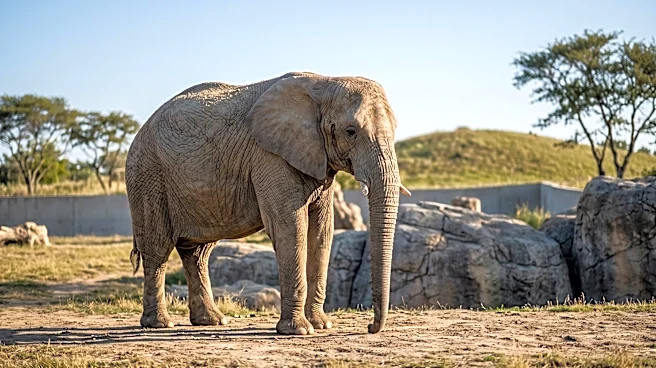
The Maryland Zoo is preparing to transfer its sole female African elephant, Felix, to another facility. This move is part of the zoo's strategic decision to transition its elephant exhibit to an all-male herd, also known as a bachelor herd. Felix, a 43-year-old
elephant who has resided at the Baltimore zoo for 19 years, is scheduled to relocate later this week. Zoo officials stated that the transfer is in Felix's best interest, as it will provide her with opportunities for social interaction with other female elephants, which have been limited since the death of the zoo's other female elephant in 2024. Felix is the mother of Samson, the zoo's younger male elephant, who was born in Baltimore in 2008. Male elephants naturally separate from their mothers and birth herds as they mature.
Why It's Important?
This decision by the Maryland Zoo is significant for several reasons, primarily concerning animal welfare and modern zoo management practices. The move highlights the increasing focus on providing optimal social environments for zoo animals, recognizing that species like elephants thrive in specific herd structures. For Felix, the transfer to a facility with other female elephants is crucial for her psychological and social well-being, addressing the isolation she experienced after the death of her previous companion. For the Maryland Zoo, the transition to an all-male herd reflects a specialized approach to elephant care, potentially allowing for a more focused management strategy for male elephants. This shift also underscores the evolving understanding of animal behavior and the commitment of accredited zoos to adapt their practices to best meet the needs of their inhabitants, even if it means rehoming long-term residents.
What's Next?
Felix's transfer is imminent, with zoo staff accompanying her on the journey and staying with her for several days to ensure a smooth transition into her new home. Following Felix's departure, the Maryland Zoo will proceed with its plan to establish a full bachelor herd. This will involve bringing in additional male elephants in the future, though a specific timeline for their arrival has not yet been announced. The zoo will likely focus on preparing its facilities to accommodate more male elephants and developing specialized care protocols for an all-male group. This transition will also involve public education efforts to inform visitors about the new herd structure and the reasons behind these changes, emphasizing the zoo's commitment to elephant welfare and conservation.
Beyond the Headlines
Beyond the immediate logistical and animal welfare considerations, the Maryland Zoo's decision to transition to an all-male elephant herd reflects broader trends in zoological institutions. There's a growing emphasis on conservation, research, and providing environments that mimic natural habitats and social structures as closely as possible. This move could also spark discussions within the zoo community about the optimal management of elephant populations in captivity, particularly regarding herd dynamics and breeding programs. It highlights the complex ethical considerations involved in keeping large, highly social animals like elephants in zoos and the continuous efforts to improve their quality of life. The story also subtly touches on the challenges zoos face in maintaining diverse animal populations and the difficult decisions that must be made to ensure the well-being of individual animals within a broader conservation mission.