







What's Happening?
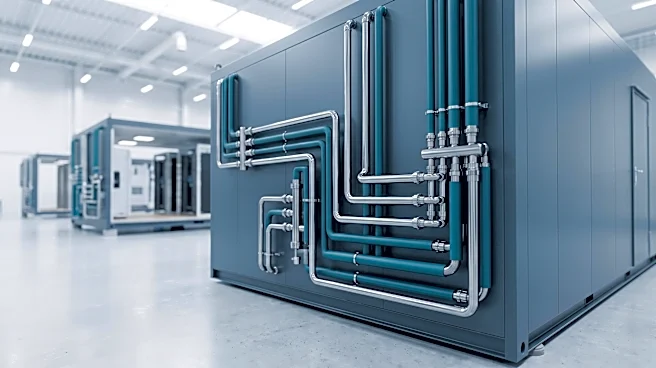
Fisk Electric, a subsidiary of Tutor Perini, has been awarded a $24 million contract to provide electrical services for a new modular data center in Houston. This project involves the prefabrication and assembly of modular containment systems, which include
liquid-cooled components and piping. These specialized components will be manufactured at Fisk's newly established 75,000-square-foot facility, also located in Houston. The initiative addresses the increasing demand for prefabrication within the data center sector, particularly in response to a national shortage of skilled labor. The project is slated to commence this year, with substantial completion anticipated by the first quarter of 2027. This strategic move by Fisk Electric highlights a broader industry shift towards innovative construction methods to overcome labor constraints and enhance efficiency in large-scale infrastructure projects.
Why It's Important?
This contract signifies a crucial development in the U.S. construction and technology sectors, particularly for the rapidly expanding data center market. The adoption of modular construction and offsite manufacturing by a major player like Fisk Electric, a Tutor Perini subsidiary, underscores a strategic response to the national shortage of skilled electricians. This approach allows for project timelines to remain on track, mitigating potential delays and cost overruns that often plague traditional construction methods. For businesses involved in data center development, this trend offers a blueprint for improving efficiency and return on investment by streamlining operations and reducing on-site disruptions. It also indicates a growing reliance on specialized facilities for prefabrication, which could lead to the creation of more manufacturing jobs in regions like Houston. The shift also impacts the competitive landscape, favoring companies that can adapt to these innovative construction techniques.
What's Next?
The project is expected to begin this year, with substantial completion targeted for the first quarter of 2027. This timeline will be closely watched by stakeholders in the data center and construction industries, as it will demonstrate the efficacy and scalability of modular construction in large-scale electrical infrastructure. The success of this project could encourage more widespread adoption of prefabrication techniques across the U.S., particularly in sectors facing similar labor shortages. Furthermore, the increased demand for offsite manufacturing facilities, like Fisk's new Houston plant, suggests a potential for further investment and expansion in this specialized manufacturing segment. Operators and contractors will likely monitor the project's progress to assess its impact on regional and national data center infrastructure development and to inform future procurement and compliance strategies, including adherence to evolving industry standards.
Beyond the Headlines
The $24 million contract awarded to Fisk Electric for the Houston modular data center points to a deeper transformation within the construction industry, driven by both technological advancements and demographic shifts. The national shortage of skilled labor, particularly electricians, is compelling companies to rethink traditional construction paradigms. Modular construction, with its emphasis on prefabrication and assembly in controlled environments, offers a solution that not only addresses labor constraints but also promises enhanced quality control, reduced waste, and faster project delivery. This shift could lead to a re-evaluation of vocational training programs and workforce development initiatives to better align with the demands of advanced manufacturing and modular assembly. Moreover, the integration of liquid-cooled components highlights the increasing complexity and energy demands of modern data centers, pushing the boundaries of electrical engineering and sustainable infrastructure. This trend could also influence urban planning, as the need for specialized manufacturing facilities for modular components grows, potentially creating new industrial hubs.