





What's Happening?
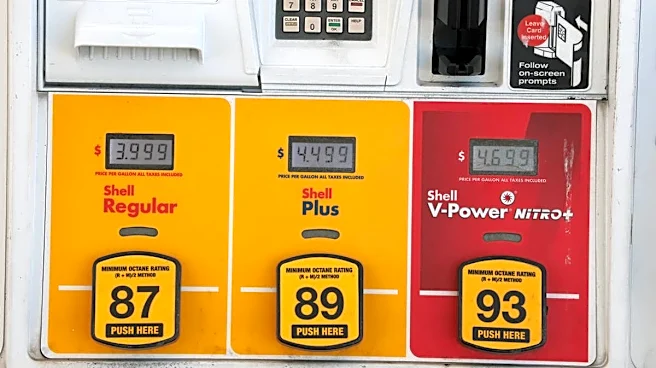
The national average price of gasoline in the United States has risen above $4 per gallon, driven by a recent surge in crude oil prices. This increase follows renewed hostilities in the Middle East, particularly the closure of the Strait of Hormuz, a critical
chokepoint for global oil shipments. The escalation in regional conflicts has led to a 16% jump in oil prices, directly impacting gasoline costs. Analysts predict further increases as geopolitical tensions continue to affect oil supply and market stability.
Why It's Important?
Rising gasoline prices have significant implications for the U.S. economy, affecting consumer spending and transportation costs. Higher fuel prices can lead to increased costs for goods and services, as transportation expenses rise. This situation underscores the vulnerability of global oil markets to geopolitical events, highlighting the need for diversified energy sources and strategies to mitigate such impacts. The price surge also reflects broader economic challenges, including inflationary pressures and the potential for reduced consumer confidence.