







What's Happening?
Valero Energy announced a significant rebound in its third-quarter earnings, with net income attributable to stockholders reaching $6.8 billion, a substantial increase from $1.1 billion in the same period last year. This surge was primarily fueled by
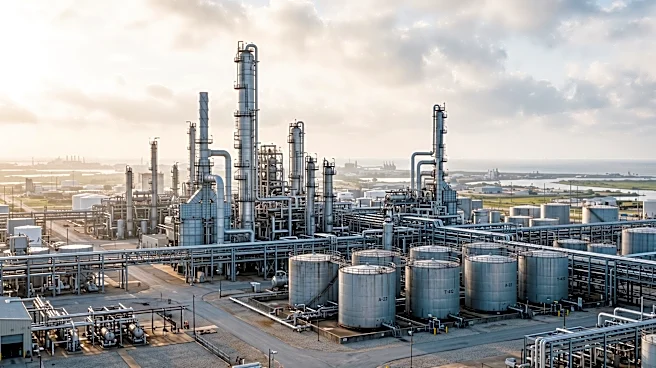
robust refining conditions and high operating rates across its core businesses. Refining operating income alone soared to $8.8 billion, up from $1.6 billion in the prior-year quarter, with refineries operating at near-record utilization rates and throughput averaging 3.0 million barrels per day. The company also saw a recovery in its renewable diesel segment, which posted an operating income of $353 million, a turnaround from a $28 million loss a year earlier. Ethanol operations also contributed positively, with operating income rising to $272 million and production setting a new quarterly record of 4.8 million gallons per day. Additionally, Valero completed a fluid catalytic cracking unit optimization project at its St. Charles refinery in Louisiana, aimed at increasing capacity for higher-value products.
Why It's Important?
This strong financial performance by Valero Energy underscores the current favorable market conditions for the refining sector and the growing profitability of renewable fuels. The significant increase in refining operating income highlights robust demand for transportation fuels and effective operational management, which can lead to increased energy security and stability in fuel prices for consumers. The turnaround in renewable diesel profitability and record ethanol production signal a positive trend for the renewable energy sector, indicating that investments in sustainable fuels are beginning to yield substantial returns. This could encourage further investment in renewable fuel infrastructure and production, contributing to the nation's energy transition goals. For investors, Valero's results demonstrate resilience and strategic positioning within the energy market, particularly as the company balances traditional refining with expanding renewable fuel capabilities. The company's ability to generate $6.9 billion in operating cash flow also provides financial flexibility for future growth and shareholder returns.
What's Next?
Valero Energy's continued focus on optimizing its refining assets and expanding its renewable fuels portfolio suggests further strategic investments. The successful completion of the St. Charles refinery project indicates a commitment to enhancing efficiency and product value, which could lead to similar upgrades across its other facilities. The positive performance in renewable diesel and ethanol may prompt Valero to further scale up its production capacities in these areas, potentially through new projects or acquisitions, to capitalize on growing demand for sustainable fuels. The company's stock performance will likely remain sensitive to global fuel margins, feedstock costs, and overall demand conditions, requiring continuous monitoring by investors. Future earnings reports will provide further insight into the sustainability of these trends and the impact of ongoing operational improvements and market dynamics on Valero's financial health and strategic direction.
Beyond the Headlines
Valero's robust earnings reflect broader shifts in the energy landscape, where traditional fossil fuel companies are increasingly integrating renewable energy solutions into their business models. This dual approach allows Valero to capitalize on current demand for conventional fuels while positioning itself for a future with greater emphasis on sustainability. The company's success in renewable diesel and ethanol production highlights the economic viability of these alternatives, potentially influencing policy decisions and investment trends across the energy sector. This could lead to increased competition and innovation in renewable fuel technologies, driving down costs and making them more accessible. Furthermore, the optimization projects in refining demonstrate a commitment to efficiency and higher-value product output, which can reduce environmental impact per unit of fuel produced and enhance overall operational sustainability. This strategic balance between conventional and renewable energy sources is crucial for navigating the evolving energy market and addressing both economic and environmental imperatives.