



What's Happening?
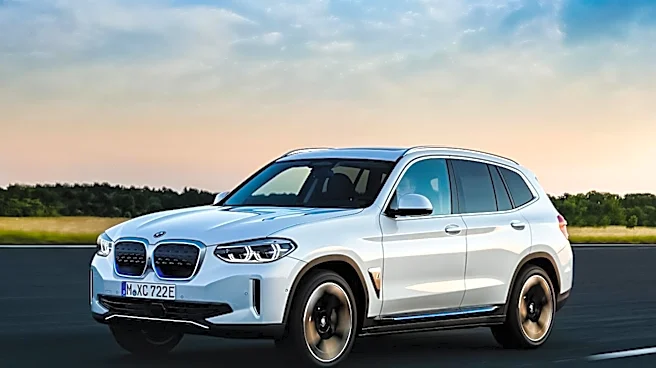
BMW has sold 100 units of its iX3 50 xDrive electric SUV in Mexico within three months of opening order books in May. The iX3, priced at 1,495,000 pesos, is currently the longest-range electric vehicle available in the Mexican market. While 100 units may
seem modest, it represents an encouraging start for BMW's electric vehicle push in a market not traditionally dominated by EVs. The iX3 is presently manufactured at BMW's new Debrecen plant in Hungary, which has seen a rapid ramp-up in production, building 50,000 vehicles and nearing 100,000 orders since its inception. BMW plans to commence local production of the iX3 and i3 sedan at its San Luis Potosí plant in Mexico starting in 2027, following an €800 million expansion, with €500 million allocated for a new battery assembly facility for Gen6 packs. This local production is expected to reduce logistics costs and improve supply.
Why It's Important?
This sales milestone, though small, signifies BMW's strategic entry and initial success in the burgeoning electric vehicle market in Mexico. The decision to localize production of the iX3 and i3 sedan at the San Luis Potosí plant from 2027 underscores a broader trend of automotive manufacturers investing in regional production hubs to cater to specific markets and mitigate global supply chain challenges. For the U.S. market, this development could indicate BMW's long-term strategy for North American EV distribution, potentially leveraging its Mexican production facilities to serve the wider region. The introduction of more affordable EV options, such as the rumored iX3 40, could further democratize electric mobility in Mexico and potentially influence pricing and availability in neighboring markets. This move also highlights the increasing competition in the EV sector, with traditional luxury automakers like BMW actively expanding their electric offerings and manufacturing capabilities to capture market share.
What's Next?
BMW is preparing for the local production of the iX3 and i3 sedan at its San Luis Potosí plant in Mexico, scheduled to begin in 2027. This expansion involves an €800 million investment, including a significant portion for a new battery assembly facility. The commencement of local production is expected to lead to more substantial sales figures for BMW's electric vehicles in Mexico, as it will likely reduce logistics costs and improve vehicle availability. There is also speculation about whether BMW will introduce the cheaper iX3 40 model to the Mexican market, which could further boost sales and make electric mobility more accessible. The company is also open to expanding long-wheelbase models to other markets, although major regions like Europe and the United States are currently excluded. The success of these initial sales and the upcoming local production will provide a clearer picture of the appetite for new-generation EVs in Mexico and potentially influence BMW's broader North American EV strategy.
Beyond the Headlines
The early sales success of the BMW iX3 in Mexico, despite its premium price point, suggests a growing demand for luxury electric vehicles even in markets where EV adoption is still in its nascent stages. This trend could accelerate the development of charging infrastructure and related services in Mexico, creating new opportunities for businesses in the energy and technology sectors. Furthermore, BMW's significant investment in local production at its San Luis Potosí plant highlights a strategic shift towards regionalized manufacturing, which could have long-term implications for global supply chains and trade agreements. This localization effort also positions Mexico as a key player in the future of electric vehicle manufacturing, potentially attracting further foreign investment and fostering technological advancements within the country. The decision to exclude major markets like Europe and the U.S. from long-wheelbase iX3 models also indicates a nuanced approach to market segmentation, tailoring products to specific regional preferences and demands.