






What's Happening?
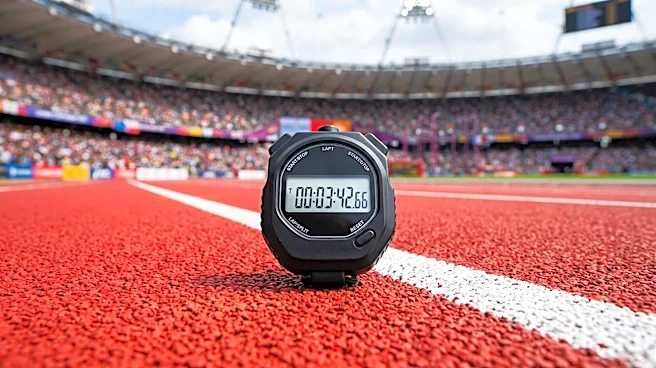
World Athletics has announced significantly stricter qualification standards for the marathon events at the 2028 Los Angeles Olympic Games, leading to considerable discussion among athletes. For men, the new standard is set at 2 hours and 5 minutes, while
for women, it is 2 hours, 22 minutes, and 20 seconds. These times are notably faster than previous Olympic qualification marks, with the women's standard being over four minutes quicker than the requirement for the Paris Games. The governing body aims for 40% of the 70-person field for both men and women to qualify by meeting these time standards, with the remaining spots to be filled via the world rankings. This shift emphasizes both elite performance times and consistent high-level results across multiple competitions.
Why It's Important?
The implementation of these sharper qualification standards by World Athletics is a pivotal change that will significantly impact marathon runners globally, including those in the U.S. The increased difficulty in achieving direct qualification means that fewer athletes will meet the time standard, intensifying competition for both direct spots and ranking-based entries. This could lead to athletes focusing more on strategic race selection to accumulate ranking points, rather than solely chasing a single fast time. For national Olympic committees, the stricter standards may result in smaller marathon contingents, potentially affecting medal prospects. The change also highlights World Athletics' ongoing effort to elevate the prestige and competitiveness of Olympic events, ensuring that only the very top-tier athletes participate, which could lead to faster races and new records.
What's Next?
The immediate consequence of these new standards is that athletes aiming for the LA28 Olympics will need to adjust their training and race schedules to either achieve exceptionally fast times or consistently perform well in high-scoring events to improve their world ranking. The qualification period has retroactively opened on November 1, indicating that performances from this point forward will count. Athletes will be strategizing which marathons to compete in, with platinum-label events and major marathons offering significant ranking points or direct qualification for top-five finishers. The coming years will likely see intense competition as athletes push their limits to meet these demanding criteria, potentially leading to a new era of faster marathon running as competitors adapt to the heightened expectations.
Beyond the Headlines
The controversy surrounding the new Olympic marathon qualification standards extends beyond mere athletic performance; it touches upon the accessibility and inclusivity of elite sports. While the aim is to ensure the highest level of competition, such stringent requirements could disproportionately affect athletes from nations with fewer resources or less access to top-tier training facilities and competitive races. It also raises questions about the balance between achieving peak performance and maintaining athlete health, as the pressure to run faster times could lead to increased injury risks. The emphasis on world rankings, while offering an alternative path, can also be complex and less transparent for some athletes. This policy shift reflects a broader trend in international sports federations to continually raise the bar, which, while fostering excellence, also creates significant challenges for aspiring Olympians.