





What's Happening?
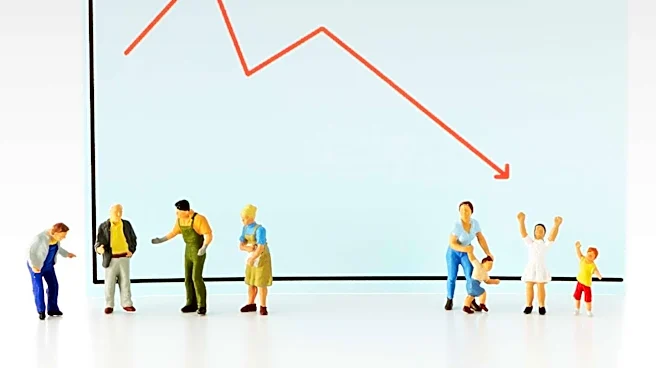
The University of Michigan reported a 12% increase in consumer sentiment in July, reaching an index level of 55.2, despite rising gas prices and geopolitical tensions. This improvement in sentiment comes as consumers focus on economic issues such as purchasing
power, rather than political or military developments. The report highlights that while sentiment has improved, it remains 11% below levels from a year ago, reflecting ongoing concerns about inflation and high prices. Recent economic data shows mixed signals, with consumer prices rising by 3.5% year-over-year in June, and economic growth in the second quarter being slower than expected. However, consumer spending remains strong, indicating resilience in the face of economic pressures.
Why It's Important?
The rise in consumer sentiment is a positive indicator for the U.S. economy, suggesting that consumers are maintaining confidence despite challenges such as inflation and high gas prices. This sentiment is crucial for economic growth, as consumer spending accounts for a significant portion of economic activity. The improvement in sentiment may support continued consumer spending, which could help offset slower economic growth. However, the persistence of high inflation and rising costs could strain household budgets, potentially impacting future spending. Policymakers and businesses will need to consider these factors when making decisions that affect the economy and consumer welfare.
What's Next?
Future economic reports and inflation data will be closely watched to assess the trajectory of consumer sentiment and spending. The Federal Reserve's actions regarding interest rates will also be pivotal, as they aim to balance controlling inflation with supporting economic growth. Businesses may need to adapt to changing consumer behaviors and preferences, while policymakers could face pressure to address inflation and support economic stability. The ongoing geopolitical situation and its impact on energy prices will also be a key factor influencing consumer sentiment and economic conditions.