




What's Happening?
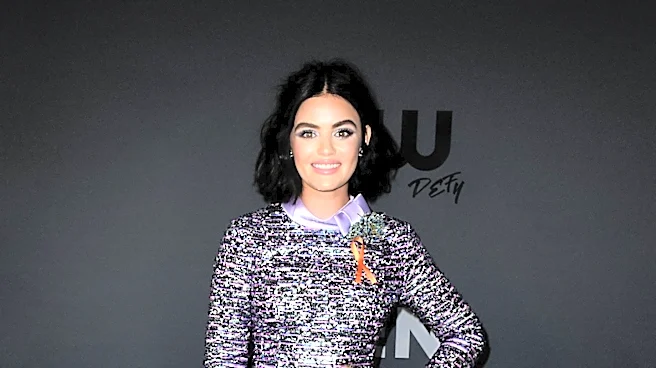
Actress Maia Reficco has publicly stated that Lucy Hale, known for her role in 'Pretty Little Liars', was her 'gay awakening'. Reficco, who previously appeared in Nickelodeon Latin America's 'Kally's Mashup', made this revelation during an interview with
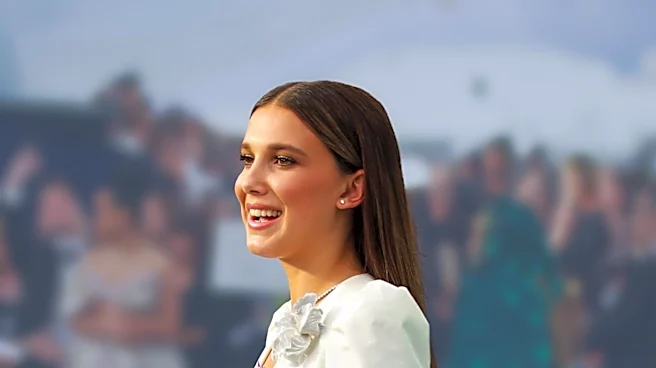
Zach Sang. The conversation arose while discussing the HBO spin-off of 'Pretty Little Liars', in which Reficco stars. When Sang initially assumed both Reficco and her co-star Fernando Lindez were straight, Reficco quickly corrected him, asserting, 'I am not straight.' She then elaborated on Hale's influence, mentioning that she had many posters of Hale and Miley Cyrus, leading her to question her own sexuality. Lucy Hale starred as Aria Montgomery in the original 'Pretty Little Liars' series. Hale has previously played queer roles and, in a 2021 interview with The Advocate, stated her preference to keep her personal sexuality private, emphasizing her belief in fluidity and attraction to 'people as people'.
Why It's Important?
Maia Reficco's public declaration about Lucy Hale serving as her 'gay awakening' is significant for several reasons, particularly within the entertainment industry and for LGBTQ+ representation. Such statements from public figures contribute to increased visibility and normalization of diverse sexual orientations, potentially offering validation and a sense of recognition for young LGBTQ+ individuals. For fans of both Reficco and Hale, this personal insight can foster a deeper connection and understanding. It also highlights the impact of media representation, as Hale's roles and public persona evidently resonated deeply with Reficco. This kind of open dialogue from celebrities can help challenge societal norms and reduce stigma surrounding LGBTQ+ identities, encouraging more inclusive conversations in mainstream media and among the general public. The discussion also touches upon the evolving understanding of sexuality, moving towards a more fluid and person-centric view, as Hale herself has alluded to.
What's Next?
Following Maia Reficco's statement, there may be increased public discussion and media attention surrounding LGBTQ+ representation in Hollywood and the personal journeys of celebrities. This could lead to more public figures sharing their own experiences or supporting LGBTQ+ causes. For Reficco, this candidness might strengthen her connection with her LGBTQ+ fanbase and potentially influence future roles or advocacy efforts. Lucy Hale, who has previously expressed support for the LGBTQ+ community and maintained privacy regarding her own sexuality, may continue to be a figure associated with LGBTQ+ allyship, regardless of her personal disclosures. The broader entertainment industry might see a continued trend towards more diverse storytelling and character development that reflects a wider spectrum of sexual identities, driven by both audience demand and the increasing openness of its stars.
Beyond the Headlines
This event transcends a simple celebrity anecdote, touching upon the profound impact of media figures on personal identity formation, particularly for LGBTQ+ youth. The concept of a 'gay awakening' through a public figure underscores how representation, even if unintended, can provide crucial mirrors and windows for individuals exploring their own identities in a world that often lacks diverse portrayals. It highlights the ethical responsibility of media and public figures, whether they choose to disclose their own identities or not, in shaping societal perceptions and offering role models. Furthermore, it subtly challenges the traditional media's often heteronormative lens, pushing for a more nuanced understanding of attraction and identity. The conversation also implicitly raises questions about privacy versus public responsibility for celebrities, especially when their personal lives intersect with broader social movements and identity politics.