


What's Happening?
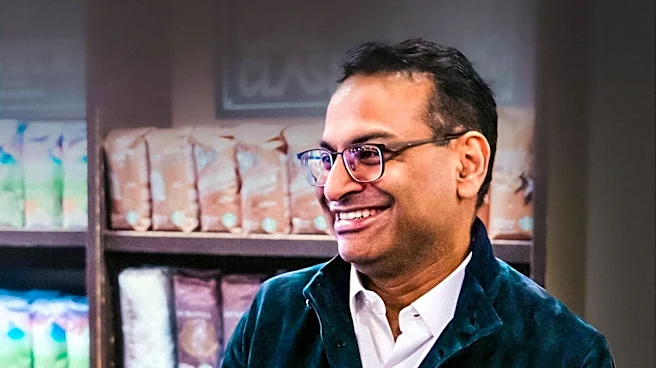
Laxman Narasimhan, a leader with over 30 years of experience in global brands, has been noted for his significant roles at PepsiCo and Reckitt, and a global career at McKinsey. He is recognized for his transformational and people-driven approach. Narasimhan's
career also includes serving as a trustee of the Brookings Institution, a member of the Council on Foreign Relations, and a board member for Verizon. He previously contributed to the UK Prime Minister’s Build Back Better Council. In the context of Starbucks' CEO succession, Narasimhan took over from Howard Schultz in 2023. However, his tenure was relatively brief, as he was succeeded by Brian Niccol in 2024. This marks a period of multiple CEO changes for Starbucks within a short timeframe, following Schultz's interim leadership in 2022.
Why It's Important?
The rapid succession of CEOs at a major global company like Starbucks, particularly the transition from Laxman Narasimhan to Brian Niccol, can signal potential shifts in corporate strategy and operational focus. Narasimhan's background in consumer goods and his global experience suggest a focus on brand growth and international market expansion. His replacement by Niccol, another experienced leader, indicates Starbucks' ongoing efforts to navigate market challenges and maintain its competitive edge. Such leadership changes can impact investor confidence, employee morale, and the company's long-term strategic direction, especially concerning initiatives like market reform, smart queue systems, and sales recovery in key markets like China. The stability of leadership is often a critical factor in a company's ability to execute its vision and achieve sustained growth.
What's Next?
Following Brian Niccol's succession of Laxman Narasimhan as CEO in 2024, Starbucks will likely focus on implementing its strategic plans for the coming years, potentially extending to its FY2026 financial reports. The company's official announcements and financial analyses will provide insights into its direction, particularly regarding market reforms, the adoption of new technologies like 'Smart Queue' systems, and efforts to revitalize sales, especially in the Chinese market. Stakeholders, including investors and consumers, will be closely watching for signs of stability and growth under the new leadership. The company's ability to effectively manage these transitions and deliver on its strategic objectives will be crucial for its performance and market perception in the near future.
Beyond the Headlines
The frequent CEO changes at Starbucks, including the recent transition from Laxman Narasimhan to Brian Niccol, could reflect broader challenges faced by large multinational corporations in a dynamic global economy. It raises questions about the pressures on corporate leadership to deliver immediate results and adapt to rapidly evolving consumer preferences and market conditions. The emphasis on 'market reform' and 'Smart Queue' systems suggests a drive towards operational efficiency and technological integration, which are common themes across many industries. The focus on sales recovery in China also highlights the critical importance of international markets for global brands and the complexities involved in navigating diverse economic and cultural landscapes. These leadership shifts may indicate a strategic re-evaluation of how best to achieve sustainable growth and maintain brand relevance in an increasingly competitive environment.