





What's Happening?
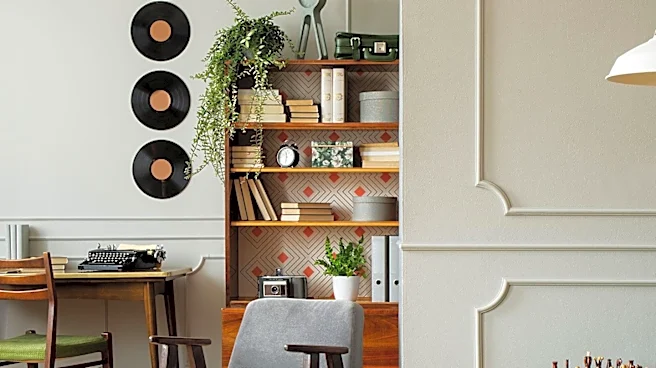
Dark wood finishes, such as walnut and mahogany tones, are making a significant comeback in home decor, moving away from the minimalist blond wood trends that have dominated interiors for years. This resurgence is evident across various platforms, including
social media feeds and targeted advertisements. While vintage pieces from the 1960s and 1970s are available through avenues like Facebook Marketplace, the search for specific items can be time-consuming. Consequently, retailers such as Amazon, Walmart, Wayfair, and IKEA are now offering a wide array of affordable, yet sophisticated, dark wood tables, mirrors, and accessories. These new offerings provide consumers with accessible options to incorporate the warm, vintage-inspired aesthetic into their homes without the extensive effort often required for thrifting.
Why It's Important?
The return of dark wood finishes signifies a shift in consumer preferences within the U.S. home decor market, moving towards richer, more traditional aesthetics. This trend impacts both consumers and retailers. For consumers, it offers an opportunity to update their living spaces with a classic, elegant look that can appear more expensive than it is, especially with the availability of affordable options from major retailers. This accessibility democratizes a style that might otherwise be limited to those with the time and resources for extensive vintage hunting. For retailers, it presents a new market demand, encouraging the production and promotion of dark wood furniture and decor. This could lead to increased sales in this category and a potential re-evaluation of inventory to align with evolving design trends, influencing manufacturing and supply chain decisions.
What's Next?
As dark wood finishes gain traction, consumers can expect to see an even broader selection of related products across various price points. Retailers will likely continue to expand their offerings to meet this demand, potentially introducing more engineered wood, veneer, and other materials that mimic the look of solid black walnut and mahogany at lower costs. This trend may also influence interior designers and home staging professionals to incorporate more dark wood elements into their projects, further solidifying its presence in contemporary decor. Additionally, the emphasis on affordability suggests that manufacturers will continue to innovate in creating cost-effective yet visually appealing dark wood alternatives, making this style accessible to a wider demographic.
Beyond the Headlines
The re-emergence of dark wood finishes in home decor reflects a broader cultural inclination towards nostalgia and a desire for warmth and richness in personal spaces. In an increasingly digital and often sterile world, the tactile and visual comfort offered by deep wood tones can provide a sense of grounding and timelessness. This trend also subtly challenges the fast-paced nature of design cycles, as vintage-inspired pieces often carry a sense of longevity and heritage. The availability of affordable options also highlights a consumer desire for aspirational aesthetics without prohibitive costs, indicating a market that values both style and practicality. This shift could also be seen as a counter-movement to the minimalist, often stark, design trends, suggesting a yearning for more ornate and character-filled environments.