


What's Happening?
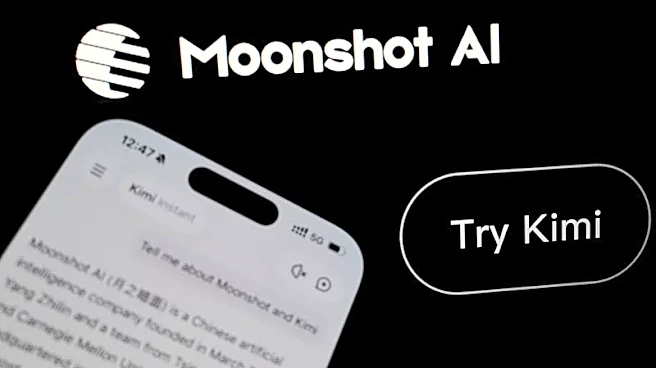
The Chinese AI firm Moonshot has released its Kimi K3 model, a significant development in the AI landscape due to its open-weight approach. With 2.8 trillion parameters, Kimi K3 is positioned as the world's first open 3T-class model, offering a flexible
license for commercial use. Despite trailing behind Anthropic's Claude Fable 5 and OpenAI's GPT 5.6 Sol in performance, Kimi K3 has been praised for its cost-effectiveness and flexibility. The release has prompted U.S. tech giants to reconsider their strategies, as over 270 companies have signed an open letter advocating for policy measures to support open-weight models. However, the initiative has revealed divisions within the industry, with Anthropic warning against the risks of open-weight models.
Why It's Important?
The launch of Kimi K3 represents a shift in the AI industry towards more open and accessible models, challenging the dominance of U.S. tech companies. The model's cost-effectiveness and flexible licensing could make it an attractive option for businesses looking to integrate AI into their operations. This development may pressure U.S. companies to adopt similar open-weight strategies to remain competitive. The situation also highlights the geopolitical dimensions of AI development, as U.S. firms express concerns over China's growing influence in the field. The response from U.S. companies and policymakers will be crucial in determining the future landscape of AI innovation and competition.
What's Next?
The release of Kimi K3 is likely to accelerate discussions around open-weight models and their implications for the AI industry. U.S. companies may need to adapt their strategies to compete with more flexible and cost-effective models from China. This could involve increased collaboration and policy advocacy to support open-weight initiatives. Additionally, the industry may see further debates over the ethical and security implications of open-weight models, particularly in the context of international competition. The coming months will be critical in shaping the direction of AI development and the balance of power between U.S. and Chinese tech firms.