





What's Happening?
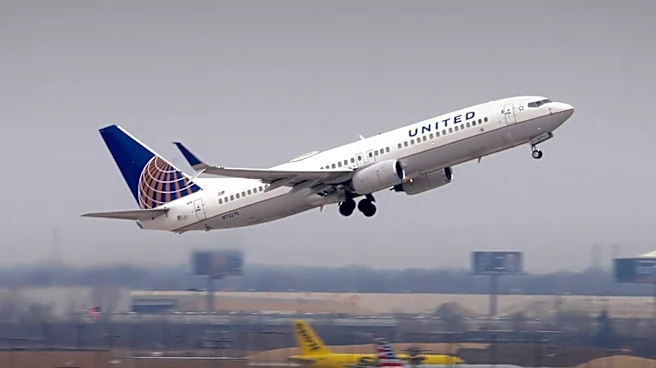
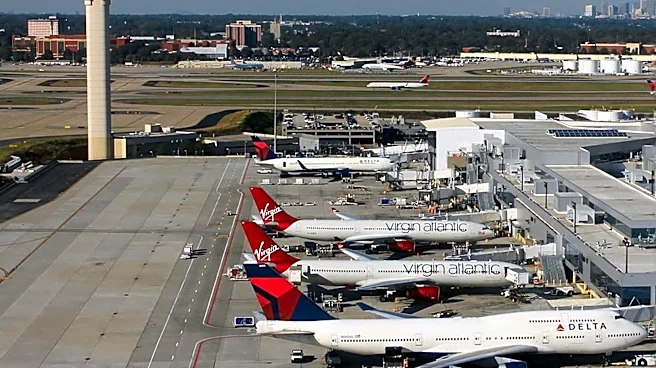
United Airlines has unveiled an ambitious plan to revitalize Washington Dulles International Airport with a budget of $22.5 billion. The project aims to transform the airport's infrastructure by adopting a layout similar to that of Hartsfield-Jackson
Atlanta International Airport, featuring a fully separated landside terminal and linear airside concourse connected by an underground train. United CEO Scott Kirby has expressed enthusiasm for the project, which he claims was heavily influenced by President Trump's vision for the airport. However, the plan has sparked concerns over the projected costs, with estimates suggesting fees could reach $90 per departing passenger by the mid-2030s. This cost, known as 'cost per enplanement' (CPE), is expected to rise significantly from the current $12.77, assuming the project is primarily debt-financed without federal grants.
Why It's Important?
The revitalization of Dulles Airport is significant as it represents a major investment in U.S. aviation infrastructure, potentially enhancing the airport's capacity and efficiency. For United Airlines, this project is a strategic move to compete with Delta Air Lines' successful hub in Atlanta. However, the high projected costs could have substantial implications for passengers, potentially leading to increased ticket prices. The financial burden of the project, if not managed carefully, could also impact the airport's competitiveness and accessibility. Additionally, the project's success or failure could influence future infrastructure investments and public-private partnerships in the aviation sector.
What's Next?
The next steps for the Dulles Airport project involve finalizing design plans and securing financing. The Metropolitan Washington Airports Authority (MWAA) has issued a request for qualifications for a design-builder for the first phase of the project, with construction expected to begin in late 2027. As the project progresses, stakeholders will need to address concerns about cost overruns and ensure that the revitalization enhances the airport's functionality without compromising its iconic design. The project's outcome will be closely watched by industry analysts and could set a precedent for future airport developments in the U.S.
Beyond the Headlines
Beyond the immediate financial and logistical challenges, the Dulles Airport project raises questions about the role of government investment in infrastructure. Unlike international counterparts such as Doha Hamad and Singapore Changi, which benefited from significant government funding, the Dulles project relies heavily on debt financing. This approach may limit the project's scope and impact its long-term sustainability. Additionally, the project's design choices will need to balance modernization with preserving the airport's historical and architectural significance, particularly the iconic Eero Saarinen-designed main terminal.