


What's Happening?
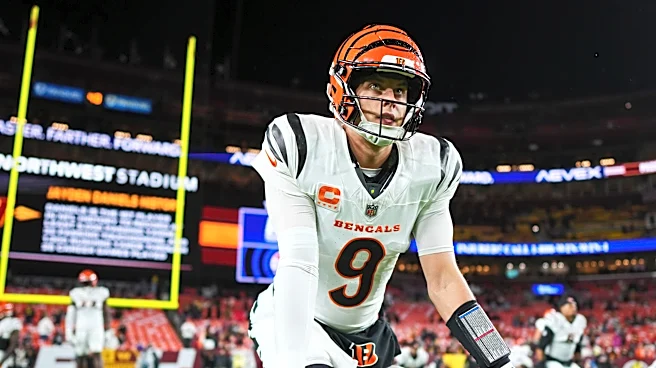
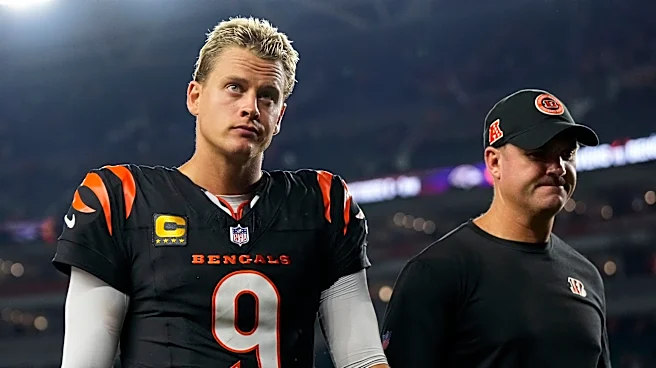
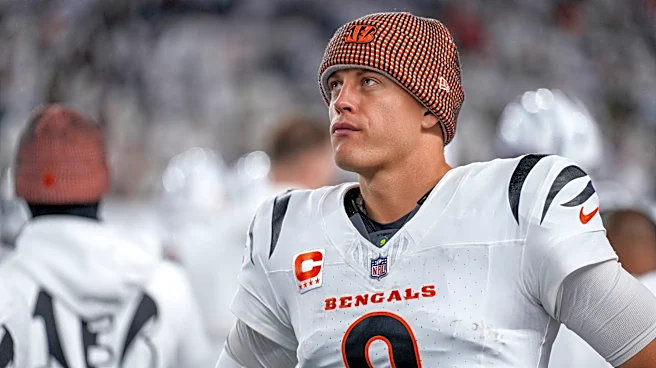
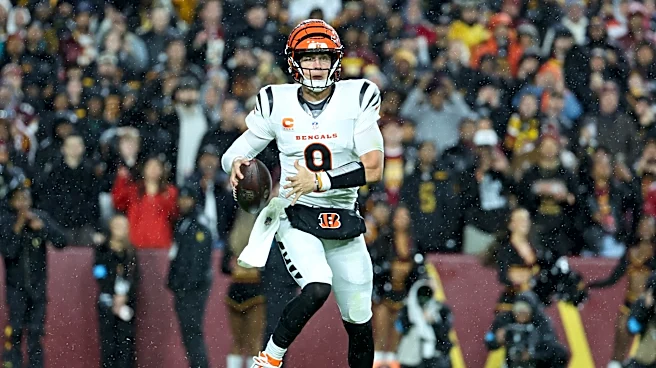
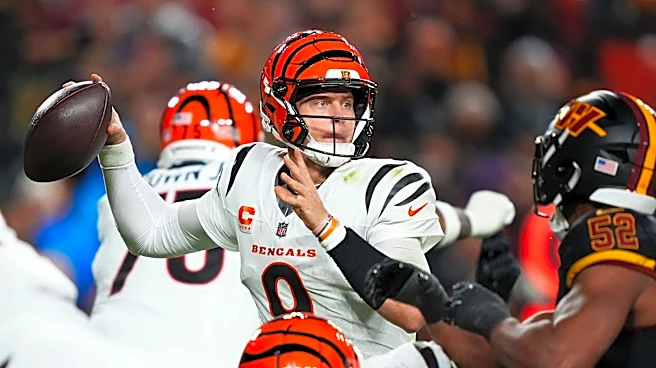
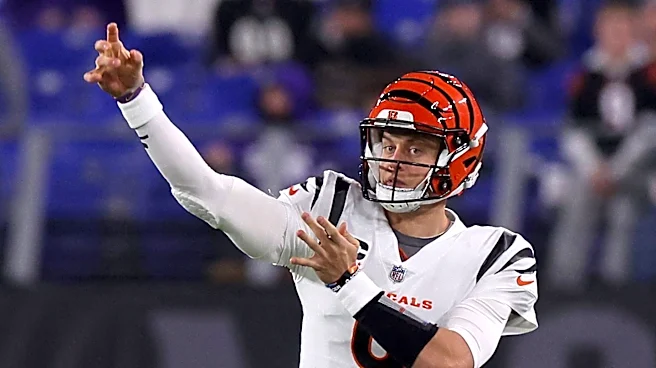
Cincinnati Bengals quarterback Joe Burrow is currently challenging the NFL record for the highest completion percentage in a single season, a record held by Drew Brees. Burrow's current completion percentage stands at 74.2%, closely trailing Brees' 2018
record of 74.4%. This pursuit highlights Burrow's accuracy and efficiency, drawing comparisons to Brees, who is considered an idol by Burrow. Ken Anderson, a Bengals Ring of Honor member and former quarterback, noted the significance of Burrow achieving such a high percentage with a substantial number of attempts. The article details Brees' previous records, including 70.62% in 2009 and 72% in 2017, emphasizing his pioneering role in achieving high completion rates. Burrow acknowledges the similarities in their playing styles, particularly their quick release, accuracy, and ability to enable receivers to gain yards after the catch. The Bengals' offensive strategy under head coach Zac Taylor is also noted for playing to Burrow's strengths, including his comfort in the shotgun formation and his deep understanding of the game.
Why It's Important?
This development is significant for the NFL and its fans, as it showcases a potential shift in quarterback performance standards, emphasizing accuracy and efficiency. If Joe Burrow surpasses Drew Brees' record, it would solidify his position among the league's elite quarterbacks and set a new benchmark for future players. For the Cincinnati Bengals, Burrow's high completion percentage is a critical factor in their offensive success, contributing to sustained drives and scoring opportunities. This level of precision can lead to improved team performance, potentially impacting playoff contention and overall franchise value. The comparison to Brees, a Super Bowl-winning quarterback, also elevates Burrow's profile and could influence future player evaluations and contract negotiations across the league. The emphasis on quick releases and accuracy, as highlighted by both Burrow and his coaches, reflects an evolving trend in quarterback play that prioritizes ball distribution and maximizing receiver potential.
What's Next?
As the NFL season progresses, all eyes will be on Joe Burrow's performance to see if he can maintain or improve his completion percentage to break Drew Brees' record. His upcoming games will be crucial in determining whether he can achieve this historic milestone. The Bengals' offensive strategy will likely continue to leverage Burrow's strengths, focusing on plays that allow him to get the ball out quickly and accurately. This pursuit could also spark broader discussions within the NFL about quarterback training, offensive schemes, and the increasing importance of completion percentage as a key performance indicator. The outcome will not only impact Burrow's legacy but also potentially influence how future quarterbacks are scouted, developed, and utilized in the league. Fans and analysts will be closely monitoring each game to see if Burrow can etch his name into the NFL record books.
Beyond the Headlines
Beyond the immediate statistical chase, Burrow's pursuit of Brees' record highlights a deeper evolution in quarterback play and offensive philosophy in the NFL. The emphasis on high completion percentages reflects a strategic shift towards efficiency, ball control, and minimizing turnovers, rather than solely relying on deep throws. This approach, championed by quarterbacks like Brees and now Burrow, underscores the value of consistent, precise passing in modern football. It also brings into focus the role of coaching and offensive coordination in tailoring schemes to a quarterback's specific strengths, as seen with Joe Brady's influence at LSU and Zac Taylor's approach with the Bengals. This trend could lead to a re-evaluation of traditional quarterback metrics and a greater appreciation for accuracy and decision-making under pressure. The ongoing comparison between Burrow and Brees also fosters a narrative of generational talent, connecting past legends with present stars and enriching the historical context of the sport.