






What's Happening?
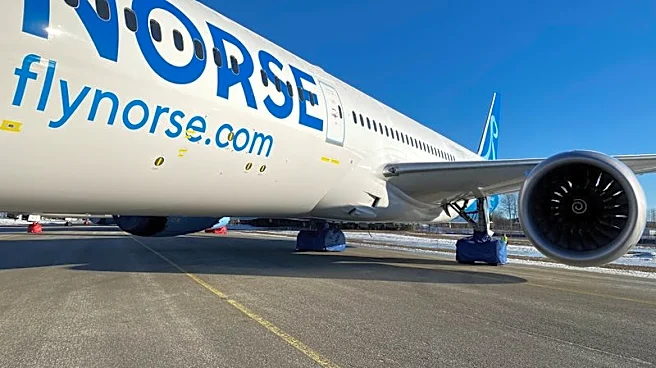
Norse Atlantic Airways has suspended all flights as of November 26 and issued a warning that it will file for bankruptcy unless it secures urgent financing. The Norwegian long-haul carrier is currently engaged in discussions with investors regarding a potential
takeover that would include a financial solution. The company also held an information meeting on November 25 with holders of its $52 million senior secured bonds, which mature in 2027 and carry a 15% coupon. This announcement follows a statement from Norse Atlantic ASA on November 25, describing its financial situation as 'critical' and emphasizing the immediate need for financing to maintain liquidity and operations. The suspension of flights has directly impacted its wet-lease customer, Pakistan International Airlines (PIA), which had to cancel two flights on November 25 from London Heathrow to Islamabad and from Manchester to Lahore. PIA stated that Norse notified them of the suspension without prior warning as passengers were preparing to board. In response, PIA plans to deploy its own Boeing 777 fleet for UK operations starting November 26 to maintain its network schedule.
Why It's Important?
The potential bankruptcy of Norse Atlantic Airways highlights the precarious nature of the airline industry, particularly for newer long-haul, low-cost carriers. This situation could lead to significant disruptions for travelers who have booked flights with Norse Atlantic or its partners, such as Pakistan International Airlines. For the broader aviation market, the failure of another airline could signal ongoing challenges in profitability, especially for models reliant on specific market conditions or wet-lease agreements. Investors in Norse Atlantic's senior secured bonds face substantial risk, as the company's inability to secure financing could result in significant losses. The incident also underscores the operational risks for airlines that rely on wet-lease agreements, as demonstrated by PIA's sudden need to reallocate its own resources to cover disrupted routes. This event could lead to increased scrutiny of the financial stability of smaller airlines and potentially impact future wet-lease market dynamics.
What's Next?
Norse Atlantic Airways will continue its urgent discussions with investors in an attempt to secure a short-term financing solution or a takeover deal. The outcome of these talks will determine whether the airline can resume operations or if it will proceed with a bankruptcy filing. If financing is not secured, the board intends to file for bankruptcy, which would likely lead to the permanent cessation of flights and the liquidation of assets. For Pakistan International Airlines, the immediate next step is to fully transition its UK operations to its own Boeing 777 fleet to ensure service continuity for its passengers. PIA is also pursuing the matter with Norse Atlantic Airways at contractual and executive levels, which could involve legal actions to address the disruption and potential financial damages incurred. The situation will also be closely watched by bondholders, who will be monitoring any developments that could affect the recovery of their investments.
Beyond the Headlines
The struggles of Norse Atlantic Airways reflect a broader trend of challenges faced by long-haul, low-cost carriers in a volatile global aviation market. The airline emerged in early 2021, aiming to fill the void left by Norwegian's exit from long-haul operations, but has consistently struggled with profitability despite strong revenue growth. Its strategy shift to allocate half its Boeing 787 fleet to wet-lease agreements, such as with IndiGo and later Pakistan International Airlines, indicates attempts to adapt to market conditions. However, geopolitical issues affecting IndiGo's business case and the current abrupt suspension highlight the vulnerabilities of such strategies. This situation could prompt a re-evaluation of the viability of the ultra-low-cost long-haul model, especially in an environment of fluctuating fuel prices, geopolitical instability, and intense competition. The incident also raises questions about regulatory oversight and early warning systems for airlines facing critical financial distress, particularly concerning passenger protection and operational continuity.