




What's Happening?
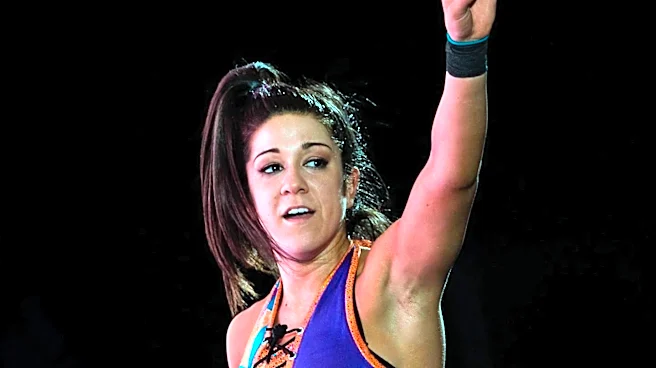
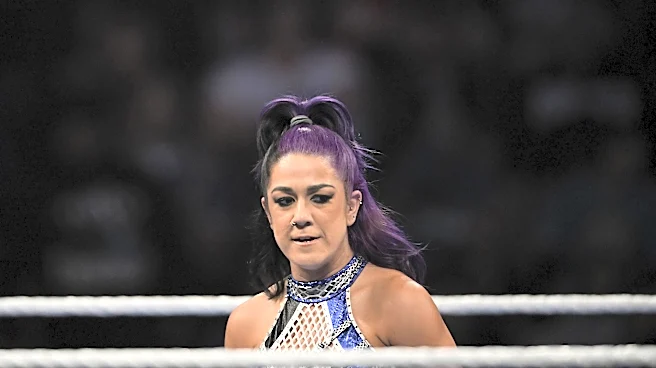
WWE Superstar Bayley recently spoke on The AJ Styles Podcast about her early career struggles with the 'Divas era' expectations in WWE. Bayley, who was instrumental in the women's revolution in WWE, debuted during a period when the promotion was still
transitioning from its Divas era. She recounted the pressure to conform to a specific image, including dressing in certain ways or wearing bikinis, which made it difficult for her to feel confident. Bayley explained that it took a significant amount of time to reconcile her authentic self, Pam, with the persona of a female superstar within the WWE's then-prevailing mold. Her main-roster debut occurred in mid-2016, shortly after the WWE Divas title had been retired, indicating a shift in the company's approach to women's wrestling.
Why It's Important?
Bayley's reflections highlight the historical challenges faced by female wrestlers in WWE during the 'Divas era,' underscoring the significant cultural and professional shifts that have occurred in women's professional wrestling. Her experience sheds light on the pressures to prioritize appearance over athletic prowess, which was a common critique of the Divas era. This discussion is important for understanding the evolution of women's roles in sports entertainment and the ongoing efforts to promote authenticity and athleticism. For current and aspiring female wrestlers, Bayley's story serves as a testament to the importance of self-acceptance and perseverance in an industry that has historically placed stringent demands on female performers. The shift away from the Divas title and the subsequent 'women's revolution' represent a broader industry-wide movement towards greater equality and recognition for female athletes.
What's Next?
The ongoing dialogue about the 'Divas era' and the subsequent 'women's revolution' in WWE suggests a continued focus on empowering female athletes and promoting diverse representations within professional wrestling. Discussions like Bayley's on The AJ Styles Podcast contribute to a broader understanding of the industry's past and its future direction. This could lead to further initiatives within WWE and other wrestling promotions to ensure that female performers are judged primarily on their athletic talent and character development rather than outdated aesthetic standards. The emphasis on authenticity, as discussed by Bayley, is likely to remain a key theme for emerging talent, influencing how new wrestlers are trained and presented to audiences.
Beyond the Headlines
Bayley's candid account touches upon deeper societal implications regarding body image and gender roles within entertainment. Her struggle to 'fit that mold' reflects broader pressures faced by women in various public-facing professions. The 'Divas era' in WWE, while a specific context, mirrors historical trends where female performers were often objectified or confined to stereotypical roles. The eventual 'women's revolution' in WWE can be seen as a microcosm of larger cultural shifts towards gender equality and empowerment. This evolution not only impacts the wrestling industry but also contributes to changing perceptions of female athletes and entertainers in mainstream media, encouraging a focus on skill, strength, and individuality over superficial standards.