


What's Happening?
Energy Absolute Public Company Limited (EA) has inaugurated the factory of its subsidiary, Absolute Assembly Co., Ltd. (AAB), located in Ban Pho District, Chachoengsao Province, Thailand. This facility is dedicated to the production and assembly of electric
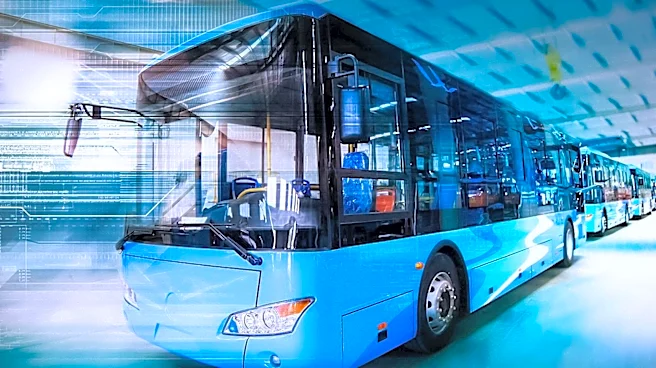
buses for the Bangkok Mass Transit Authority (BMTA) project, which aims to introduce 1,520 clean-energy, air-conditioned buses. AAB, a Thai-owned manufacturer and assembler of commercial electric vehicles within the EA group, is now fully operational across all stages of production, collaborating with Nakhonchai Air and Nex Point Public Company Limited (NEX). The factory tour showcased four key production stages: chassis welding, anti-rust coating and painting, vehicle assembly (including electric powertrains and interior components), and final testing. Mr. Chatrapon Sripratum, Chief Executive Officer of Energy Absolute Public Company Limited, emphasized the company's commitment to quality and passenger safety, highlighting the role of the Thai team in ensuring vehicle standards.
Why It's Important?
This initiative represents a significant step towards sustainable urban transportation in Thailand and offers insights for U.S. industries and policymakers. The large-scale production of electric buses for a major metropolitan area like Bangkok demonstrates a growing global commitment to reducing carbon emissions and improving air quality in urban centers. For U.S. manufacturers and technology providers in the electric vehicle (EV) sector, this project signals a robust international market for EV components, charging infrastructure, and related services. It also highlights the potential for job creation and skill development in the green economy, as emphasized by Mr. Sripratum regarding the Thai workforce. The success of such projects abroad can inform U.S. policy decisions regarding incentives for EV adoption, public transit modernization, and investments in domestic EV manufacturing capabilities. Furthermore, it showcases how public-private partnerships can drive large-scale transitions to cleaner energy solutions in transportation.
What's Next?
The AAB factory's full operational status means that the production of 1,520 electric buses for the Bangkok Mass Transit Authority is now in full swing. This will lead to a gradual replacement of internal combustion engine buses with electric ones, resulting in reduced exhaust emissions and lower noise levels along transit routes. The experience gained from this large-scale manufacturing project is expected to provide a foundation for the EA Group to expand into other types of commercial electric vehicles, tailored to the specific needs of transport operators. This could include electric trucks, vans, or other specialized vehicles, further contributing to the decarbonization of Thailand's transportation sector. The project's success may also serve as a model for other cities and countries looking to transition their public transport systems to electric vehicles, potentially creating new export opportunities for Thai EV manufacturers and technology providers.
Beyond the Headlines
Beyond the immediate environmental and economic benefits, this development signifies a broader shift in global manufacturing and urban planning. The emphasis on a Thai-owned facility managing the entire production process underscores a trend towards localized manufacturing capabilities for advanced technologies, reducing reliance on foreign supply chains. This localization not only creates domestic jobs and expertise but also fosters national technological independence. Ethically, the transition to electric buses addresses public health concerns related to air pollution in densely populated urban areas, improving the quality of life for residents. Culturally, the sight of modern, clean electric buses becoming a daily part of Bangkok's landscape could foster greater public acceptance and demand for sustainable technologies, influencing consumer behavior and policy priorities in the long term. This project exemplifies how infrastructure investments can drive both economic growth and societal well-being.