






What's Happening?
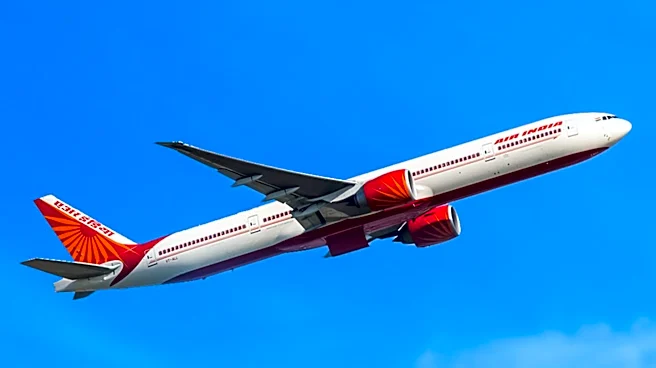
Air India is undertaking a comprehensive review of its international network and operational costs as part of a financial turnaround strategy led by CEO Tewolde Gebremariam. The airline is grappling with significant losses, the impact of closed Pakistani
airspace, and high fuel prices. Gebremariam's immediate focus is to reduce unit costs below unit revenues. This involves integrating corporate functions and resources with its low-cost arm, Air India Express, and potentially appointing a new finance chief from outside the company. The airline is also considering shifting a larger portion of its Europe and North America services from Delhi to Mumbai, with Bengaluru being explored as a third international hub. Several European routes, including Delhi–Birmingham, Delhi–Vienna, Delhi–Copenhagen, and Amritsar–London Gatwick, have been dropped from the winter schedule, and some U.S. routes like Delhi–Washington and Delhi–Chicago were temporarily suspended in 2025 and 2026, respectively. Additionally, flights to Riyadh, Dammam, and Jeddah remain suspended due to regional security concerns.
Why It's Important?
This strategic overhaul by Air India carries significant implications for the global aviation industry and international travel, particularly for passengers connecting between India, Europe, and North America. The potential shift of international operations to Mumbai and Bengaluru could alter established travel patterns and airport traffic, impacting the competitiveness of various hubs. By focusing on cost control and optimizing its network, Air India aims to improve its financial stability, which could lead to more sustainable and reliable services in the long term. However, the reduction or suspension of certain routes might inconvenience travelers and affect connectivity. The airline's ambition to increase connecting traffic from 10% to 50% over time suggests a move towards rivaling major Gulf carriers, potentially intensifying competition in the international transit market. The success of Gebremariam's strategy, which draws parallels from his experience at Ethiopian Airlines, will be closely watched as it could set a precedent for other struggling national carriers.
What's Next?
Air India plans to expand its cargo business, including converting passenger aircraft into dedicated freighters, though specific aircraft selections or a conversion timetable have not yet been announced. The airline is also in discussions with Boeing and Airbus for additional widebody aircraft for delivery in the early 2030s, indicating a long-term vision for international expansion despite current route adjustments. A key priority is to recover passenger traffic between India and overseas destinations before significantly increasing its share of international connecting traffic. The airline is exploring ways to boost overseas ticket sales to increase revenue in foreign currencies, thereby reducing its exposure to rupee depreciation. While a firm date for a return to profitability has not been provided, the current initiatives suggest a continued focus on cost reduction and revenue enhancement before any major expansion. The effectiveness of these measures will determine Air India's future financial health and its ability to compete on the international stage.
Beyond the Headlines
The challenges faced by Air India, including heavy losses and geopolitical disruptions like closed airspace, highlight the broader vulnerabilities within the global airline industry. The airline's strategy to centralize operations and optimize routes reflects a growing trend among carriers to adapt to changing economic and geopolitical landscapes. The move to increase connecting traffic and compete with Gulf carriers underscores the evolving dynamics of international air travel, where geographical advantage and efficient hub operations are crucial. The emphasis on cost control and financial restructuring also points to the increasing pressure on national airlines to operate profitably without relying heavily on government subsidies. The outcome of Air India's turnaround efforts could serve as a case study for other airlines navigating similar financial and operational hurdles, demonstrating the complexities of balancing expansion ambitions with fiscal responsibility in a highly competitive market.