





What's Happening?
Eric Hansotia, Chairman and CEO of AGCO Corp., recently spoke about the strong demand from farmers for advanced technology. His remarks highlighted how farmers are increasingly seeking technological solutions to enhance efficiency, cut costs, and boost
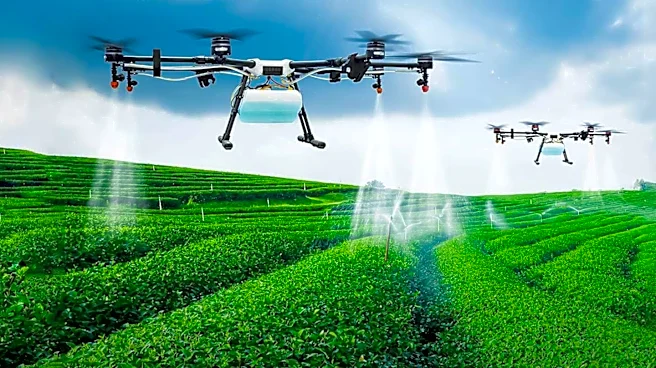
productivity in their operations. The discussion likely covered various aspects of precision agriculture, including the role of artificial intelligence (AI), automation, and data analytics in modern farming. Hansotia also touched upon broader economic factors affecting the agricultural sector, such as trade uncertainties and the pressures faced by farmers. His insights underscore the ongoing transformation within agriculture, driven by innovation and the need for sustainable practices.
Why It's Important?
The increasing adoption of technology in agriculture, as discussed by AGCO CEO Eric Hansotia, is vital for the U.S. economy and global food security. Enhanced efficiency and productivity in farming directly contribute to a more stable food supply, potentially lowering consumer costs and strengthening the agricultural sector's competitiveness. For U.S. industries, this trend creates new markets for technology providers, fosters innovation in agricultural machinery, and drives demand for skilled labor in areas like data science and engineering. The integration of AI and precision agriculture can also lead to more sustainable farming practices, reducing environmental impact and optimizing resource use. This shift benefits farmers by improving profitability and resilience in the face of economic and environmental challenges.
What's Next?
Following the insights from AGCO CEO Eric Hansotia, the agricultural sector is expected to see continued investment and innovation in farm technology. This will likely include further development and deployment of AI-powered systems, autonomous farm equipment, and advanced data analytics tools. Farmers will continue to seek solutions that address labor shortages, optimize resource allocation, and improve crop yields. Policymakers may also consider initiatives to support the adoption of these technologies, potentially through subsidies or educational programs. The industry will also need to address challenges related to data privacy, cybersecurity in agricultural systems, and ensuring equitable access to these technologies for all farmers, regardless of farm size or location.
Beyond the Headlines
The 'thirst for technology' among farmers, as described by Eric Hansotia, signifies a profound shift in the identity and operational model of agriculture. This goes beyond mere efficiency gains, touching upon the very nature of food production and rural economies. The integration of advanced technology transforms farming into a data-driven, high-tech industry, potentially attracting a new generation of agricultural professionals with diverse skill sets. However, it also raises questions about the digital divide, the cost of entry for small farmers, and the potential for increased consolidation in the agricultural sector. The ethical implications of AI in food production, such as algorithmic bias in crop management or the impact on traditional farming knowledge, will also become increasingly relevant. This technological evolution in agriculture is not just about feeding the world more efficiently, but also about redefining the future of rural communities and the relationship between humans and the land.