


What's Happening?
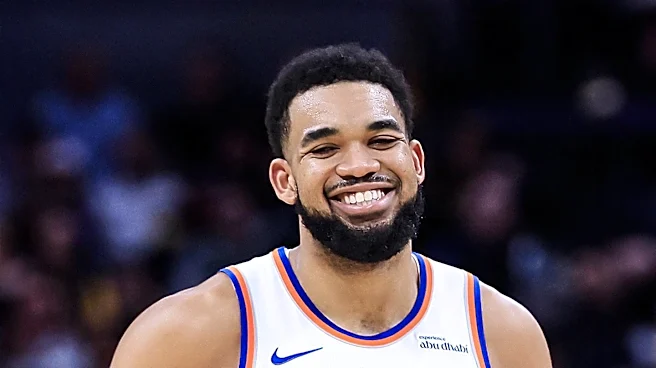
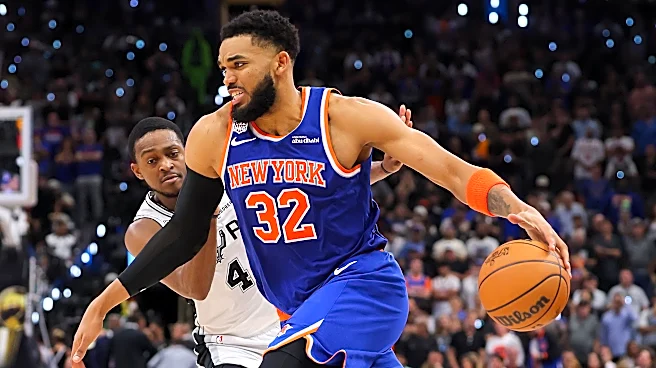
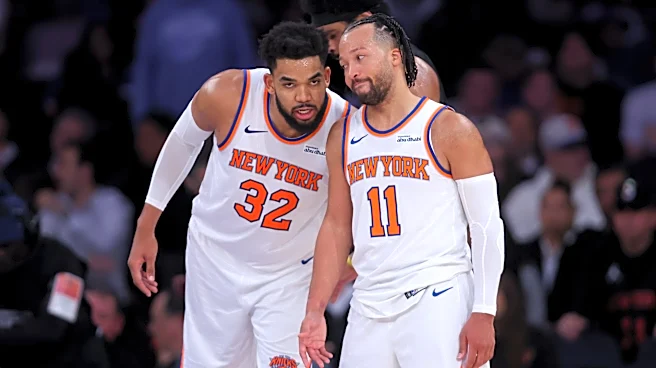
New York Knicks star Karl-Anthony Towns is currently in negotiations for a max extension, reportedly worth $276 million, but faces a significant gap with the team's offer. Towns, in his 12th season, is performing exceptionally well, averaging 21.1 points,
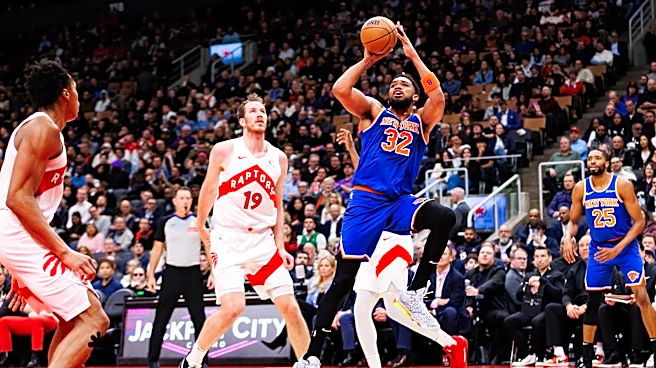
13.7 rebounds, and 3.7 assists per game, shooting 54.2% from the field and 40.0% from deep. He has recorded a double-double in all 13 appearances this season, including a 28-point, 17-rebound performance against the Raptors. Despite his strong play, the Knicks have reportedly offered $76 million less than the full max extension, largely due to owner James Dolan's reluctance to exceed the second apron threshold. Towns has indicated a willingness to take a pay cut of $10 to $20 million to remain with the team long-term, but the current offers remain far apart. The Knicks have until June 30 to reach an agreement, with Towns holding a player option for $61 million next season.
Why It's Important?
This contract dispute is significant for both Karl-Anthony Towns and the New York Knicks. For Towns, this represents potentially his last major contract, and the ongoing negotiations will determine his long-term financial security and team affiliation. His consistent high-level performance, particularly his rebounding and scoring, makes him a crucial asset for the Knicks. For the team, securing Towns at a favorable price is vital for their competitive future and salary cap management. Owner James Dolan's stance on avoiding the second apron threshold highlights a broader financial strategy that could impact player retention and future acquisitions. If an agreement isn't reached, the Knicks risk losing a star player who is currently playing at an elite level, potentially forcing them to seek alternatives in the free agent market or through trades, which could be costly and disruptive to team chemistry and performance. The outcome of these negotiations could set a precedent for how the Knicks handle future high-value contracts under the current collective bargaining agreement.
What's Next?
The New York Knicks and Karl-Anthony Towns have until June 30 to finalize an extension agreement. As Towns continues his strong performance, his market value is likely to increase, potentially making it more challenging for the Knicks to secure him at a reduced rate. If the two sides cannot bridge the reported $76 million gap, Towns could explore other options in the free agent market next summer, where his current play would likely attract significant offers from other teams. The Knicks will need to weigh the financial implications of exceeding the second apron against the competitive necessity of retaining a player of Towns' caliber. The ongoing negotiations will likely involve further discussions and revised offers from both sides as the deadline approaches. The team's performance throughout the season could also influence the urgency and terms of a potential deal, as a successful season might incentivize both parties to find common ground.
Beyond the Headlines
The situation with Karl-Anthony Towns and the Knicks extends beyond a simple contract negotiation; it reflects the evolving financial landscape of the NBA, particularly concerning the luxury tax and salary cap thresholds. Owner James Dolan's reluctance to exceed the second apron threshold underscores a growing trend among some NBA owners to prioritize financial prudence and avoid punitive luxury tax penalties, even if it means potentially losing star talent. This approach can create tension between team management, who are focused on long-term financial sustainability, and players, who seek to maximize their earnings based on their on-court performance. The ethical dimension arises from the perceived value of a player versus the financial constraints of the team. While Towns has expressed a willingness to take a pay cut, the significant difference in offers suggests a fundamental disagreement on his market value within the team's financial framework. This scenario could influence future player-team negotiations across the league, as players and agents observe how teams balance competitive aspirations with financial limitations.