






What's Happening?
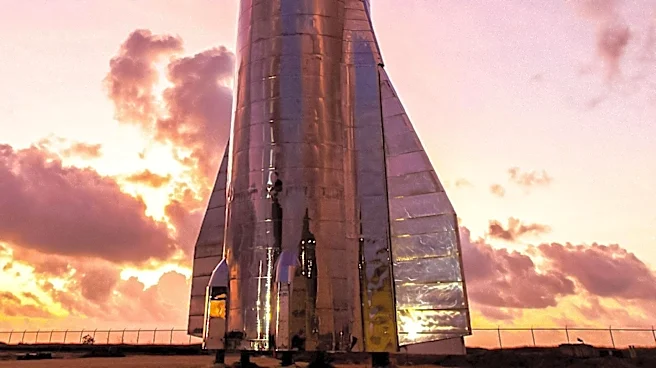
SpaceX has submitted a request to the U.S. Federal Aviation Administration (FAA) to significantly increase its Starship launch frequency from its Starbase facility in South Texas. The company is seeking permission for up to 456 Starship launches per year,
a substantial increase from its current allowance of 25 annual flights. This proposal also includes a request for approval of 912 landings per year, as both the Super Heavy booster and the Starship upper stage are designed for reusability and return to the launch pad. The FAA is currently in the initial stages of reviewing this request, having announced its intent to prepare a Programmatic Environmental Impact Statement and to hold public scoping meetings in November. SpaceX plans to implement this increased cadence in two phases, with Phase 1 allowing up to 100 annual launches and 200 landings, and Phase 2 escalating to the full 456 launches and 912 landings. The megarocket has completed 14 test flights from Starbase, with the most recent successful mission on September 28 reaching orbit and deploying 26 Starlink V3 satellites.
Why It's Important?
This ambitious request by SpaceX underscores its long-term vision for Starship as a cornerstone of its space operations, particularly for deploying vast satellite constellations like Starlink and the planned Starmind AI megaconstellation. Achieving such a high launch cadence would revolutionize space access, drastically reducing the cost and increasing the frequency of sending payloads to orbit. This would have profound implications for various U.S. industries, including telecommunications, defense, and scientific research, by enabling faster deployment of advanced satellite networks and facilitating more frequent space missions. The ability to launch and land hundreds of times a year would also solidify the U.S.'s leadership in reusable rocket technology and commercial spaceflight. However, the environmental review process by the FAA is critical, as such a high volume of launches could raise concerns regarding local ecosystems, noise pollution, and air quality in the South Texas region, potentially leading to regulatory hurdles and public opposition.
What's Next?
The FAA will proceed with its review process, which includes preparing a Programmatic Environmental Impact Statement and conducting five public scoping meetings in November. Four of these meetings will be held in person in the Starbase area, and one will be virtual, allowing for public input on SpaceX's proposal. Following these meetings and the environmental assessment, the FAA will determine whether to grant the requested increase in launch frequency. SpaceX is also actively developing additional Starship launch capabilities, with three pads under construction on Florida's Space Coast and plans to break ground on a 12-pad complex in Louisiana next year. The company aims to achieve over 10,000 Starship liftoffs per year by 2030, indicating a continuous push for expansion and increased operational tempo across multiple sites. The outcome of the FAA's review will be a critical factor in determining the pace of Starship's operational scaling and its impact on the commercial space industry.
Beyond the Headlines
The pursuit of such an unprecedented launch cadence by SpaceX highlights a broader shift in the aerospace industry towards rapid reusability and high-volume operations, moving away from the traditional model of bespoke, infrequent launches. This paradigm shift could democratize access to space, making it more affordable and accessible for a wider range of commercial and scientific endeavors. The environmental impact assessment will be a crucial test case for balancing technological advancement with ecological responsibility, potentially setting precedents for future large-scale space operations. Furthermore, the development of a robust, high-frequency launch infrastructure could enhance national security capabilities by providing rapid deployment options for defense assets in space. The success of this endeavor could also spur significant economic growth in regions hosting launch facilities, creating jobs and fostering innovation in related industries, while also raising questions about the long-term sustainability of such frequent space activities.