





What's Happening?
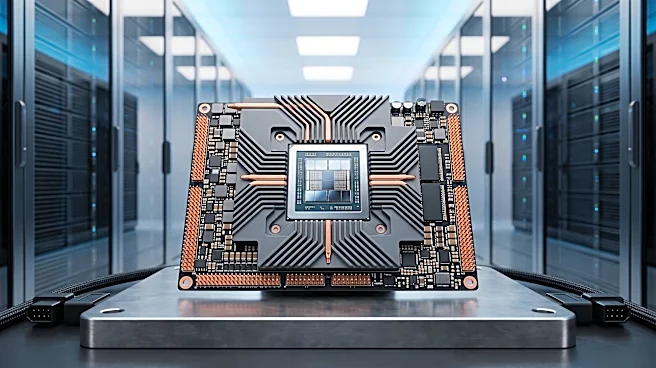
Weekday AI is actively recruiting for an ML Kernel Engineer, AI Expert position in the United States. The role requires familiarity with Trainium hardware architecture, specifically mentioning NeuronCore-v2, on-chip SRAM topology, and support for various
data types including FP32, BF16, FP8, and INT8. This indicates a focus on advanced machine learning and artificial intelligence development, leveraging specialized hardware for high-performance computing. The job posting highlights the growing demand for engineers proficient in cutting-edge AI hardware, suggesting a strategic investment by Weekday AI in optimizing their AI capabilities through specialized kernel development. The emphasis on specific Trainium components underscores the technical depth required for this position, pointing to complex tasks related to hardware-software interaction and performance optimization.
Why It's Important?
This recruitment drive by Weekday AI is significant for the U.S. technology sector, particularly in the field of artificial intelligence. The demand for engineers with expertise in Trainium hardware architecture signals a broader industry trend towards utilizing specialized AI accelerators to enhance computational efficiency and performance. As AI models become more complex and data-intensive, the ability to optimize software for specific hardware architectures like Trainium becomes crucial for achieving breakthroughs in AI research and application. This could lead to advancements in various sectors, including cloud computing, data analytics, and autonomous systems, where high-performance AI is a key differentiator. Companies that successfully integrate and optimize such hardware stand to gain a competitive edge, potentially driving innovation and creating new job opportunities within the U.S. tech landscape.
What's Next?
The successful hiring of an ML Kernel Engineer with Trainium expertise will likely enable Weekday AI to further optimize its AI models and services, potentially leading to more efficient and powerful AI solutions. This could translate into new product offerings or significant improvements to existing ones, impacting their market position. The continued demand for specialized AI hardware engineers suggests a sustained trend in the industry towards hardware-software co-design for AI. Other companies in the AI space may follow suit, increasing the competition for talent with similar skill sets. This could also spur further development and innovation in AI accelerator technologies, as companies strive to outpace each other in computational capabilities.
Beyond the Headlines
The focus on Trainium hardware and specific data types like FP32, BF16, FP8, and INT8 points to a deeper industry shift towards precision and efficiency in AI computations. The use of lower precision data types (BF16, FP8, INT8) is a common strategy to reduce memory footprint and increase computational speed, which is critical for deploying large-scale AI models. This trend has ethical implications as well, as more efficient AI can be deployed more widely, potentially impacting various aspects of daily life, from personalized services to critical infrastructure. The specialized nature of this role also highlights the increasing complexity and specialization within the AI engineering field, requiring a highly skilled workforce capable of bridging the gap between hardware and software innovation.