


What's Happening?
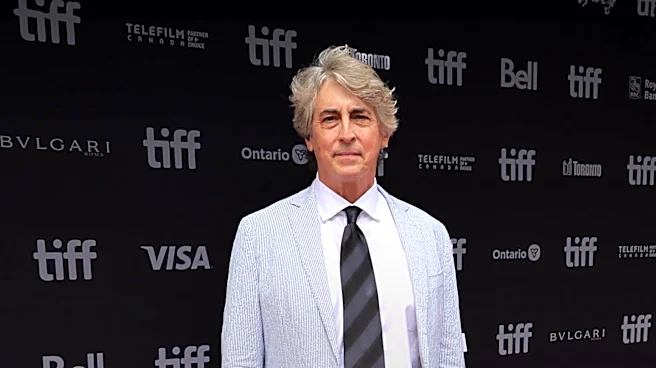
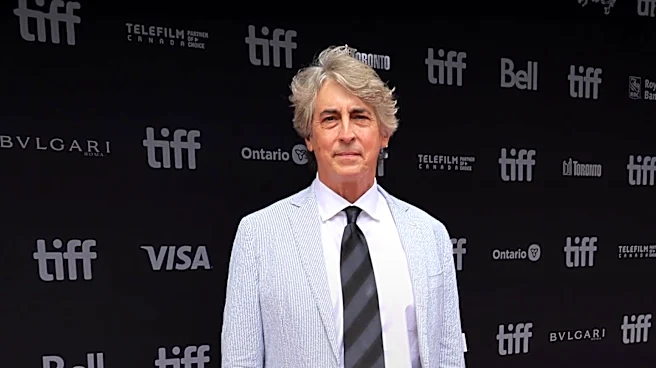
Screenwriter Simon Stephenson has filed a lawsuit against director Alexander Payne, alleging that Payne's Oscar-winning film 'The Holdovers' was plagiarized from Stephenson's unproduced script, 'Frisco.' According to the lawsuit filed in a California
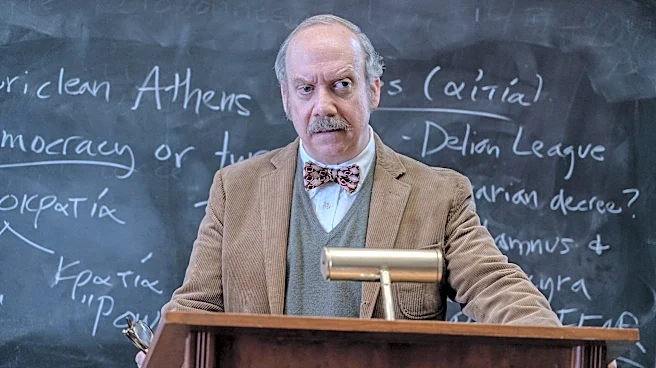
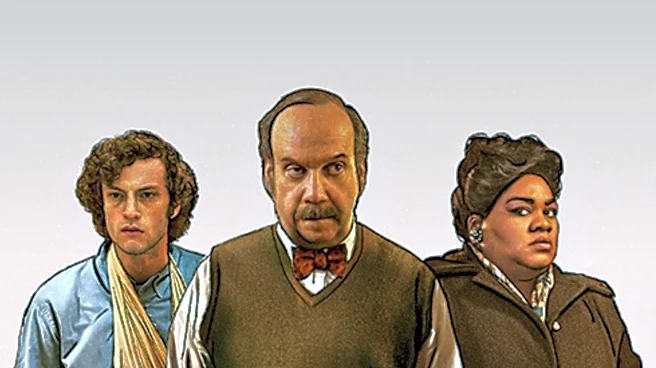
federal court, Stephenson claims he wrote 'Frisco' based on his experiences as a pediatrician and uploaded it to the industry platform 'The Black List' in 2013, where it was ranked as the third-best unproduced screenplay. The suit alleges that Stephenson's agents sent the script to Payne in 2013 and again in 2019, both times Payne declined the project. However, Stephenson claims that in 2022, Payne directed a film that closely mirrored 'Frisco,' transforming the children's hospital setting into a boarding school, the cynical pediatrician into a cynical teacher, and the precocious patient into a precocious pupil. David Hemingson, the credited screenwriter for 'The Holdovers,' is also named as a defendant.
Why It's Important?
This lawsuit highlights significant issues within the entertainment industry concerning intellectual property rights and the creative process. If Stephenson's claims are substantiated, it could set a precedent for how original screenplays are protected and how ideas are developed and attributed in Hollywood. The case could impact the careers of both Payne, an acclaimed director with multiple Academy Awards, and Hemingson, for whom 'The Holdovers' was a career-defining project. For screenwriters, particularly those without established reputations, the outcome could either reinforce the importance of robust legal protections for their work or underscore the challenges of proving plagiarism against powerful industry figures. The controversy also raises questions about the ethical responsibilities of directors and producers when encountering unproduced scripts.
What's Next?
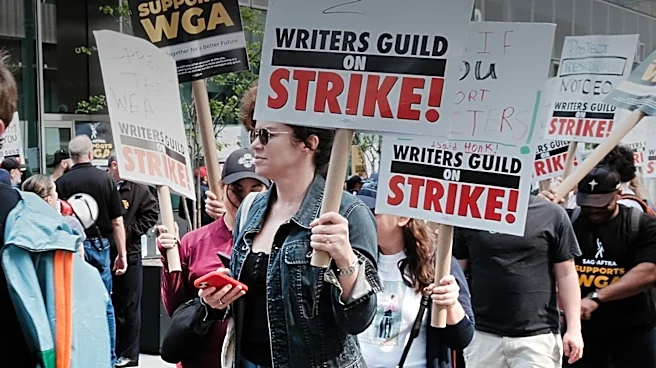
The lawsuit will proceed through the California federal court system, where Stephenson will need to present evidence to support his claims of copyright infringement. Representatives for Payne, Hemingson, and Focus Features have not yet responded to requests for comment. The legal process will likely involve discovery, where both sides exchange information and evidence, potentially including detailed comparisons of the two scripts. The Writers Guild of America (WGA) had previously been contacted by Stephenson regarding a 'credits-related issue' on a high-profile film, suggesting an internal review may have already occurred. The outcome of this lawsuit could lead to a settlement, a court ruling, or potentially an appeal, and will be closely watched by industry professionals and legal experts.
Beyond the Headlines
The allegations of plagiarism against a high-profile film like 'The Holdovers' delve into the often-murky waters of creative inspiration versus outright appropriation. The film's success, including Academy Award and BAFTA nominations for its screenplay, adds another layer of complexity, as it questions the legitimacy of those accolades if the underlying work was indeed plagiarized. This case could prompt a broader discussion within the film industry about the mechanisms for submitting and reviewing unproduced scripts, and whether current practices adequately protect original creators. It also touches on the power dynamics within Hollywood, where established directors and studios may have greater leverage in disputes over creative ownership. The legal battle will likely scrutinize the similarities in plot, character arcs, and thematic elements between 'Frisco' and 'The Holdovers,' potentially revealing how subtle or overt influences can lead to claims of intellectual theft.