






What's Happening?
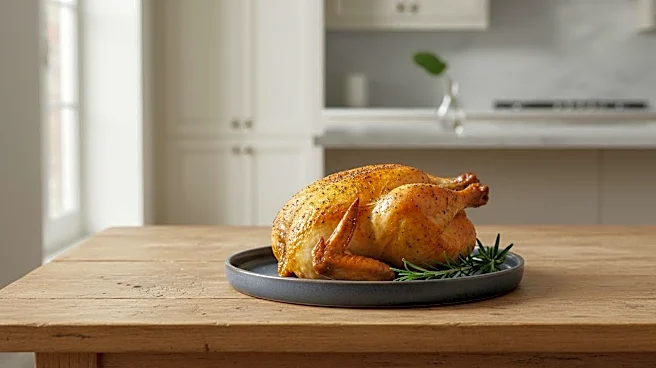
Sam's Club has been ranked higher than Costco in a recent Consumer Reports taste test evaluating rotisserie chickens from major retailers. The evaluation considered factors such as taste, nutrition, chicken weight, sodium levels, and the presence of chemicals
linked to plastics in the meat or packaging. Sam's Club's Member's Mark Seasoned Rotisserie Chicken received the highest overall rating, surpassing Costco's Kirkland Signature Seasoned Rotisserie Chicken, which came in second. The testing involved purchasing multiple chickens from different store locations, conducting blind taste tests, and screening for compounds like bisphenols, phthalates, and PFAS. Notably, no PFAS were detected in any of the chickens or packaging tested.
Why It's Important?
This ranking is significant as it challenges Costco's long-standing reputation for offering one of the best value rotisserie chickens in the market. Sam's Club's victory highlights the importance of flavor and value in consumer preferences, potentially influencing shopping habits. The result may impact sales and customer loyalty, as consumers might reconsider their choices based on the taste test results. The competition between these retail giants underscores the broader dynamics in the grocery sector, where price and quality are critical factors for consumer decision-making.
What's Next?
The outcome of this taste test could lead to increased competition between Sam's Club and Costco, prompting both retailers to enhance their offerings to attract and retain customers. Consumers may begin to experiment with different brands, potentially affecting market shares. Retailers might also focus on marketing strategies that emphasize the unique qualities of their products to differentiate themselves in a competitive market.
Beyond the Headlines
The taste test results may also prompt discussions about the role of consumer reports in shaping public perception and purchasing decisions. As consumers become more informed about product quality and safety, retailers may face pressure to maintain transparency and uphold high standards. This development could lead to broader industry shifts towards more rigorous testing and quality assurance practices.