






What's Happening?
CoreWeave, Inc. (Nasdaq: CRWV) has announced a significant expansion of its global AI cloud platform. This expansion includes bringing new computing capacity online in Denmark and extending its Global AI Network into the Middle East and Asia Pacific.
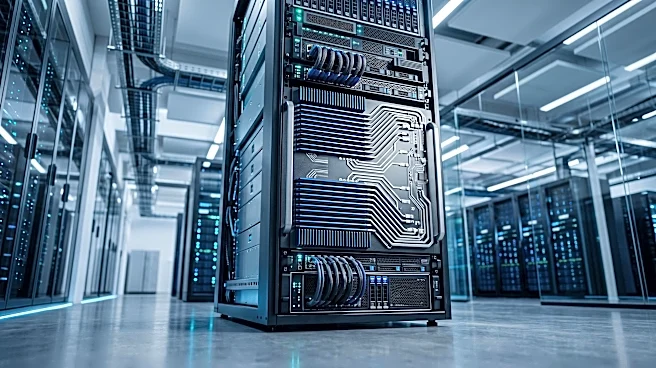
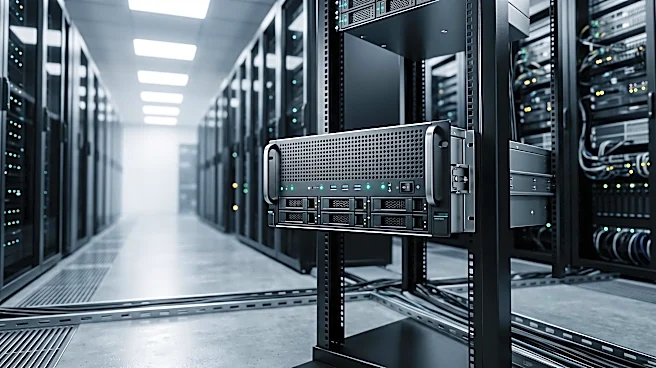
The company has deployed the majority of its planned 22.5 megawatts (MW) of IT capacity at atNorth’s DEN01 data center in Copenhagen, marking its first presence in Denmark. This facility utilizes NVIDIA Blackwell systems connected with NVIDIA Quantum-X800 InfiniBand, expanding CoreWeave's European infrastructure to nine data centers across five countries. Furthermore, CoreWeave is building the first global AI backbone network, purpose-built for AI workloads, at Petabit-scale. This network will connect locations in North America, Europe, the Middle East, and Asia Pacific, with new points of presence in the United Arab Emirates, India, Indonesia, Singapore, Australia, Korea, and Japan, starting in late 2026 and completing by mid-2027. This initiative aims to provide customers with enhanced performance, reliability, and connectivity for building and scaling AI workloads across international markets.
Why It's Important?
This expansion is crucial for the U.S. technology sector and global AI development. By increasing its computing capacity and establishing a global AI network backbone, CoreWeave is addressing the growing demand for specialized infrastructure to support AI workloads. This move reduces the complexity of infrastructure management for AI developers and enterprises, allowing them to focus on innovation rather than operational challenges. The integration of advanced NVIDIA systems ensures high-performance capabilities, which are essential for complex AI models. The strategic placement of data centers and network points across multiple continents will facilitate faster data transfer and processing for international AI operations, benefiting U.S. companies with global footprints. The partnership with atNorth also highlights a commitment to energy efficiency and sustainable operations, as the DEN01 data center incorporates heat reuse agreements, aligning with broader environmental goals within the tech industry.
What's Next?
CoreWeave's global AI network backbone is expected to be fully operational by mid-2027, with initial points of presence in the Middle East and Asia Pacific beginning in late 2026. This will provide more direct connectivity to its AI cloud platform for customers worldwide. The company plans to continue investing in infrastructure to support AI development and deployment globally, building on its existing 51 data centers and significant contracted power capacity. The expansion is likely to attract more AI labs, startups, and global enterprises seeking high-performance, reliable, and secure infrastructure for their AI initiatives. Future developments may include further geographical expansions and technological upgrades to maintain its competitive edge in the rapidly evolving AI cloud market. The focus on purpose-built AI infrastructure suggests a continued specialization in catering to the unique demands of AI workloads.
Beyond the Headlines
The establishment of a global AI backbone network by CoreWeave signifies a deeper trend in the AI industry: the increasing need for specialized, high-performance infrastructure that can handle the immense computational demands of AI. This move goes beyond simply adding data centers; it involves creating a dedicated, secure, and efficient network designed specifically for AI workloads. This could lead to a more fragmented but highly optimized cloud computing landscape, where general-purpose cloud providers coexist with specialized 'neoclouds' like CoreWeave. The emphasis on hardware-based MACsec encryption and redundant network paths highlights the growing importance of data security and reliability in AI operations, especially as AI applications become more integrated into critical sectors. This specialization could also foster innovation by providing AI developers with tailored tools and environments, potentially accelerating breakthroughs in various AI fields and influencing the future architecture of global digital infrastructure.