






What's Happening?
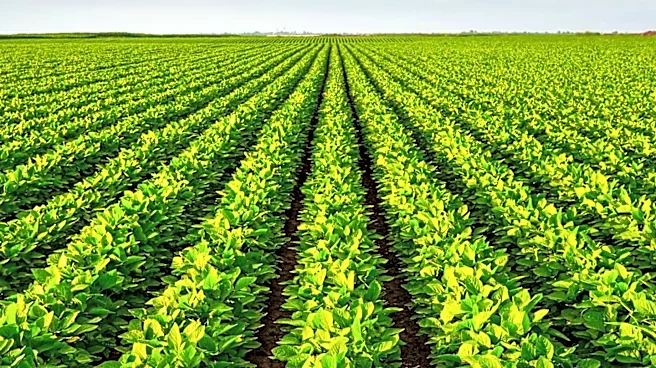
U.S. soybean farms consistently incur higher total production costs per acre than their Brazilian counterparts, primarily due to significantly greater overhead expenses, particularly land costs. A study comparing nine typical farms (four in Brazil and five
in the U.S.) from 2020 to 2024 revealed that U.S. farms spent an average of $616 per acre, compared to Brazil's $416. While direct costs for seed, fertilizer, and pesticides were similar on average ($200 in the U.S. vs. $218 in Brazil), the substantial difference in overhead, mainly land, accounted for approximately 40% of U.S. costs but only 19% to 30% of Brazilian costs. Brazilian farms face higher fertilizer and pesticide costs due to nutrient-poor soils requiring more inputs and reliance on imports, which are subject to currency fluctuations and global price spikes. Conversely, U.S. farms spend more on seed, largely because they plant genetically engineered varieties with more stacked traits and face restrictions on saving patented seeds.
Why It's Important?
This cost disparity has significant implications for the competitiveness of U.S. soybean producers in the global market. With Brazil and the U.S. together accounting for nearly 70% of global soybean production, the structural cost advantage held by Brazilian farms, particularly in land, directly impacts market share and profitability. Since the U.S.-China trade dispute began in 2018, China has increasingly sourced soybeans from Brazil, a trend exacerbated by Brazil's lower production costs. The Purdue University–CME Group Ag Economy Barometer in September 2026 indicated that 80% of producers were concerned about the competitiveness of U.S. soybeans relative to Brazil, highlighting the economic pressure on American farmers. High input costs, cited by a record 52% of respondents as their biggest concern, further squeeze profit margins for U.S. producers, making it challenging to compete on price in the global commodity market.
What's Next?
The ongoing cost differential suggests that U.S. soybean producers will continue to face competitive pressures from Brazil. While efforts to reduce input spending might offer some relief, the study indicates that the primary cost advantage for Brazil is structural, rooted in lower land costs. This implies that significant shifts in U.S. agricultural policy or land market dynamics would be necessary to fundamentally alter the competitive landscape. Brazilian farms, however, remain vulnerable to global price swings for imported inputs like fertilizer and pesticides, which could temporarily narrow the cost gap, as seen in 2023 when input costs peaked in Brazil. Monitoring these global commodity markets and currency fluctuations will be crucial for both U.S. and Brazilian producers in managing their cost structures and market strategies.
Beyond the Headlines
The structural cost differences between U.S. and Brazilian soybean production highlight deeper economic and environmental factors. Brazil's reliance on imported fertilizers and pesticides, driven by its soil characteristics and climate, exposes its agricultural sector to geopolitical events and currency volatility. This dependency also raises questions about supply chain resilience and the environmental footprint of long-distance transportation of agricultural inputs. In the U.S., the higher seed costs, linked to advanced genetically engineered traits and intellectual property rights, reflect a different model of agricultural innovation and market control. The inability of U.S. farmers to save patented seeds, as upheld by legal precedents like Bowman v. Monsanto, underscores the complex interplay between agricultural technology, intellectual property law, and farmer autonomy. These dynamics shape not only the economics of soybean production but also broader discussions about sustainable agriculture, food security, and global trade equity.