








What's Happening?
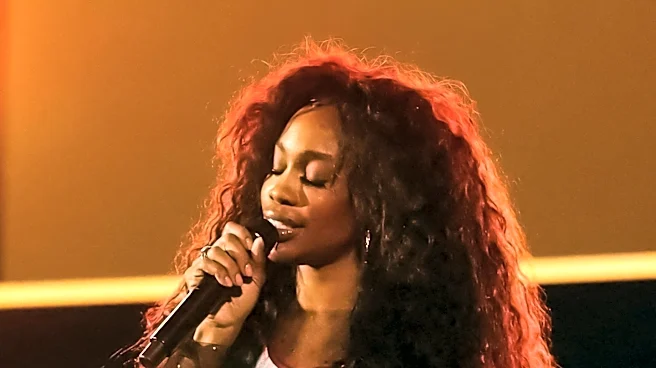
Grammy-winning singer SZA, whose real name is Solana Rowe, has publicly shared that she has been formally diagnosed with autism. The announcement was made on her burner Instagram account, where she posted what appears to be medical documentation confirming
her diagnosis. The document describes her as having a history and behaviors consistent with Autism Spectrum Disorder, noting a qualitative impairment in reciprocal social interaction. In her post, SZA expressed relief at finally taking the time to get diagnosed and highlighted her strong pattern recognition skills. She also mentioned her opposition to artificial intelligence, linking it to her recent diagnosis. Prior to this announcement, SZA had criticized AI-music creator platform Suno, pointing out that producer Diplo has equity in the company.
Why It's Important?
SZA's revelation about her autism diagnosis is significant as it brings attention to the experiences of individuals on the autism spectrum, particularly in the entertainment industry. Her openness may encourage others to seek diagnosis and understanding of their own neurodiversity. This disclosure also highlights the ongoing conversation about mental health and neurodiversity in public life, potentially reducing stigma and promoting acceptance. Additionally, SZA's stance against artificial intelligence, in light of her diagnosis, adds a personal dimension to the broader debate on AI's role in creative industries. Her influence as a public figure could impact public perception and industry practices regarding AI and neurodiversity.
What's Next?
Following her announcement, it is likely that SZA will continue to use her platform to advocate for neurodiversity and mental health awareness. Her criticism of AI in music suggests she may further engage in discussions about the ethical implications of AI in creative fields. Fans and followers may expect more personal insights and advocacy from SZA, potentially influencing her future music and public engagements. The music industry and AI developers might also respond to her criticisms, possibly leading to discussions on the ethical use of AI in music production.