



What's Happening?
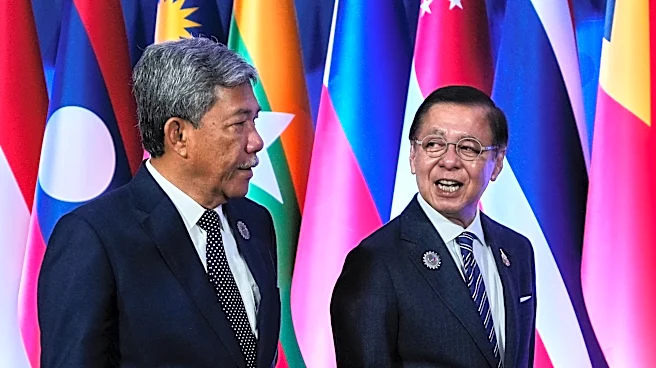
Malaysia's government has approved a fifth sukuk program, valued at RM19.05 billion, to support the financing of the East Coast Rail Link (ECRL) project. Finance Minister II Datuk Seri Amir Hamzah Azizan announced that these sukuk will be issued as United
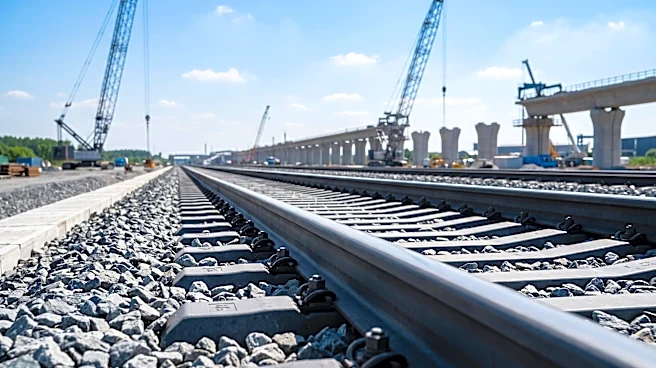
Nations Sustainable Development Goals (SDG) sukuk, aligning with sustainable development objectives. The ECRL project, a RM52.43 billion undertaking by the Malaysian government, is partially financed by a RM37.40 billion term loan from the Export-Import Bank of China (CEXIM) at an interest rate of 3.25%. The remaining funds are sourced through sukuk issuances by local banking institutions. As of October 2026, construction of the Kota Bharu-to-Gombak alignment of the ECRL project has reached 98.5% completion, with commercial operations targeted to commence on December 12, 2026.
Why It's Important?
This financing move is significant for Malaysia's infrastructure development and its commitment to sustainable financing. The ECRL project is a major transportation initiative designed to enhance connectivity across the East Coast of Peninsular Malaysia. The approval of the SDG sukuk program underscores Malaysia's efforts to integrate environmental, social, and governance (ESG) principles into its financial strategies, potentially attracting a broader base of socially conscious investors. The substantial loan from the Export-Import Bank of China highlights the continued financial cooperation between Malaysia and China on large-scale infrastructure projects, which can have implications for regional economic integration and China's Belt and Road Initiative. The project's nearing completion suggests a boost to regional trade and economic activity upon its operational launch.
What's Next?
The approved RM19.05 billion sukuk program will proceed with issuances to secure the necessary funding. The ECRL project is on track for its targeted commencement of commercial operations on December 12, 2026. This will involve final preparations and testing of the railway system. The successful launch of the ECRL is expected to facilitate economic development in Malaysia's East Coast regions, potentially increasing trade, tourism, and job opportunities. The project's progress will also be closely watched as a case study for large-scale infrastructure financing involving international loans and sustainable sukuk, potentially influencing future development projects in the region.