






What's Happening?
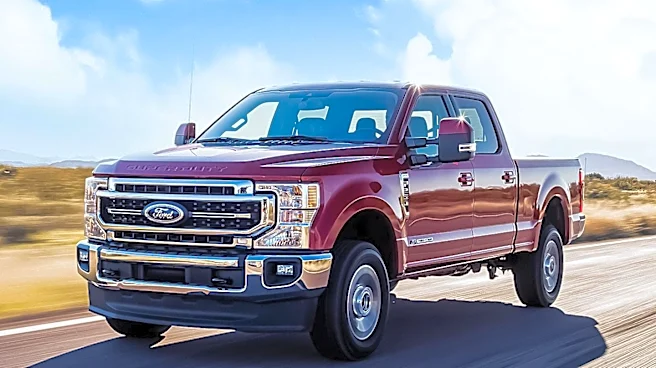
Ford Motor Company has reported a 10.3% decline in its second-quarter U.S. vehicle sales, primarily due to production issues with its F-Series pickup trucks and a significant drop in electric vehicle (EV) demand. The company's EV sales fell by 40.7% compared
to the previous year. The decline in F-Series sales was attributed to supply chain disruptions, as Ford's top aluminum supplier faced production setbacks following two fires. Despite these challenges, Ford's sales figures slightly exceeded expectations from Cox Automotive, which had predicted an 11.5% decline.
Why It's Important?
Ford's sales decline highlights the ongoing challenges faced by the automotive industry, particularly in managing supply chain disruptions and fluctuating demand for electric vehicles. The drop in EV sales is notable as it contrasts with the broader industry trend towards electrification. This situation underscores the complexities automakers face in transitioning to electric vehicles while maintaining production of traditional models. The performance of Ford's F-Series, a key revenue driver, is critical to the company's financial health and market position. The ability to resolve supply chain issues and adapt to changing consumer preferences will be crucial for Ford's future success.
What's Next?
Ford anticipates a recovery in its supply chain and production capabilities in the second half of the year, which could stabilize sales figures. The company will likely focus on addressing supply chain vulnerabilities and enhancing its EV offerings to align with market trends. Stakeholders will be keen to see how Ford navigates these challenges and whether it can regain momentum in the competitive automotive market. The broader industry will also be watching Ford's strategies as a potential indicator of future trends in vehicle production and sales.