







What's Happening?
Donovan Mitchell, a shooting guard for the Cleveland Cavaliers, recently commented on his team's past performance, specifically addressing their sweep in the playoffs. Mitchell stated that the team 'lost perspective a lot' and deserved the criticism they
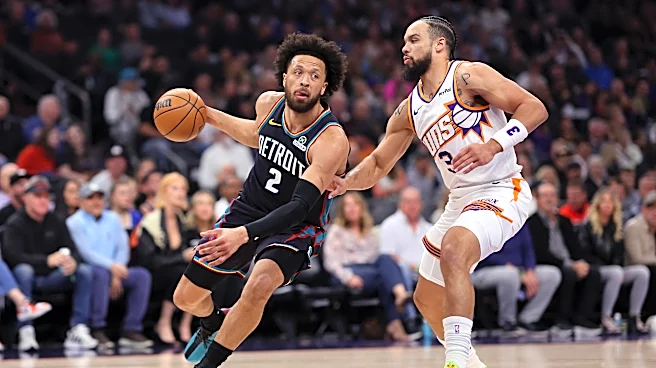
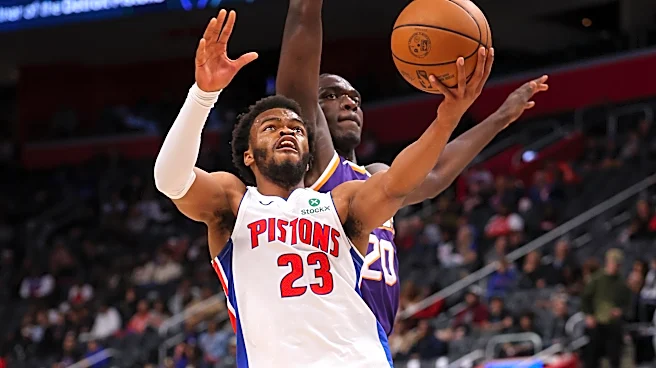
received. He highlighted that despite reaching Game 7s in previous series, they had opportunities to close out both teams in six games but 'didn't take care of business.' He cited a specific instance where a loss to Detroit by 20 points at home prevented them from having four days off before the next round, emphasizing that such missed opportunities impact a team's chances, regardless of the final outcome. His remarks underscore a critical self-assessment of the team's focus and execution during key moments in their season.
Why It's Important?
Mitchell's candid reflections are important as they offer insight into the mindset of a prominent NBA player regarding team accountability and performance. His comments can influence team dynamics, potentially fostering a renewed sense of urgency and focus among his teammates. For fans and analysts, these statements provide a deeper understanding of the internal pressures and expectations within a professional sports franchise. Furthermore, such public self-criticism from a star player can impact perceptions of the team's leadership and future prospects. It also highlights the fine margins in professional basketball, where a single game or a lapse in focus can significantly alter a team's playoff trajectory and overall season narrative. This level of introspection is crucial for team growth and strategic planning in subsequent seasons.
What's Next?
Following Mitchell's comments, the team will likely use this self-assessment as a foundation for their upcoming season preparations. His emphasis on 'taking care of business' suggests a focus on improved execution and consistency in critical games. The coaching staff and management may leverage these remarks to reinforce discipline and strategic planning. For Mitchell himself, these statements could signal a renewed personal commitment to leadership and performance. The team's response to this internal critique will be closely watched by fans and media, as it could dictate their approach to training, player development, and in-game strategies. The goal will be to translate this reflection into tangible improvements on the court, aiming to avoid similar pitfalls in future playoff runs.
Beyond the Headlines
Mitchell's comments extend beyond immediate game results, touching upon the psychological aspects of professional sports. His acknowledgment of 'losing perspective' speaks to the mental fortitude required at the elite level and the challenges of maintaining focus under pressure. This introspection can serve as a valuable lesson for aspiring athletes and teams about the importance of mental resilience and consistent effort, even when facing success or adversity. It also subtly highlights the role of leadership in guiding a team through critical moments and ensuring that every opportunity is maximized. The broader implication is that success in professional sports is not solely about talent, but also about the collective mindset, discipline, and the ability to learn from past failures to forge a stronger, more focused unit.