



What's Happening?
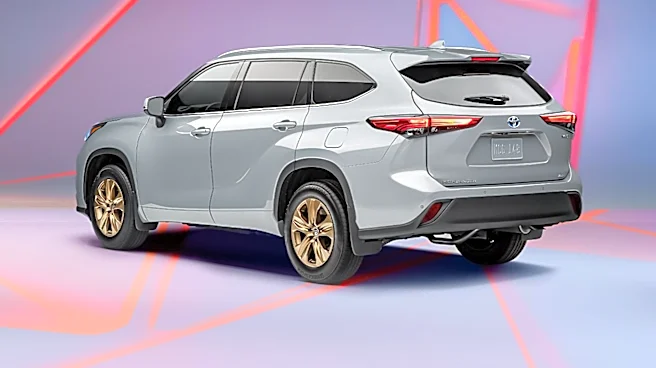
Toyota is developing a next-generation hybrid powertrain that combines a new family of 1.5-liter 4-cylinder engines with lighter and more compact electric motors, power control units, and inverters. This new system aims for a 15% improvement in fuel economy.
The powertrain is designed for Toyota's common Multi-Pathway architecture, which will enable flexible manufacturing operations to adjust product mix based on demand and market needs. The new modular engines are designed for electrification from the start, allowing for lower hoodlines and improved aerodynamics. While knowledge and resources are shared globally, Toyota Motor North America has not yet confirmed when this system will be available in the U.S. Toyota also plans to sell its hybrid system to other automakers and is developing it to run on renewable and carbon-neutral fuels.
Why It's Important?
This development is crucial for Toyota's strategy in the evolving automotive market, particularly in the U.S., where fuel efficiency and electrification are increasingly important to consumers and regulators. A 15% improvement in fuel economy can significantly reduce operating costs for consumers and lower carbon emissions, contributing to environmental goals. The Multi-Pathway architecture allows Toyota to maintain flexibility in its product offerings, balancing internal combustion engine models with various degrees of electrification (hybrid, plug-in hybrid, battery-electric, and hydrogen fuel cell). This approach helps cushion margins and adapt to fluctuating market demands and regulatory changes without committing solely to one technology. The potential to sell this hybrid system to other automakers could also establish Toyota as a key technology provider in the industry, generating additional revenue streams.
What's Next?
Toyota's next-generation hybrid powertrain is conceived to cover vehicles similar in size to the Corolla and Prius. The company's Multi-Pathway approach aims to integrate hybrid and plug-in hybrid powertrains into the same basic architecture without compromising vehicle silhouette, interior space, or capability. The fuel economy gains are attributed to reduced mechanical friction, improved thermal management, and lower electrical losses, alongside better aerodynamics. Toyota Motor Europe has stated that this extends the contribution of combustion-based electrified vehicles to emissions reduction while battery-electric and fuel cell electric technologies continue to expand. The company's intention to sell its hybrid system to other manufacturers and its development for renewable fuels suggest a long-term vision for sustainable and adaptable powertrain solutions.
Beyond the Headlines
Toyota's continued investment in hybrid technology, even as many competitors focus exclusively on battery electric vehicles, highlights a strategic divergence in the industry. This 'multi-pathway' approach reflects a belief that a diverse portfolio of electrified vehicles can better meet varied consumer needs and market conditions globally. The emphasis on flexible manufacturing also points to a future where automakers can quickly pivot production in response to supply chain disruptions or shifts in consumer preferences, enhancing resilience. The development of hybrid systems compatible with renewable and carbon-neutral fuels could also play a significant role in bridging the gap between traditional internal combustion engines and full electrification, offering a more immediate path to emissions reduction for a wider range of vehicles. This strategy could influence policy discussions around emissions standards and incentives for different types of electrified vehicles.