






What's Happening?
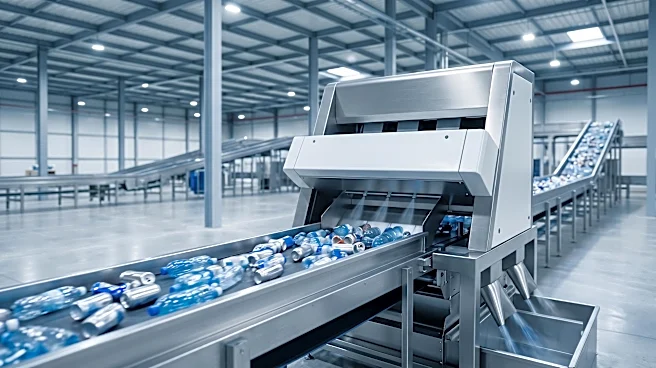
California Waste Solutions is implementing two significant technology upgrades at its material recovery facilities in the Bay Area. At the Timothy MRF in San Jose, the company is expanding the capacity of its Pellenc optical sorters. These sorters use
sensors to identify and separate specific materials from the recycling stream at high speeds, aiming to increase the recovery of targeted products and improve material purity. Concurrently, at the 10th Street MRF in Oakland, California Waste Solutions is installing EverestLabs artificial intelligence (AI) scanners. These AI scanners will monitor items entering the container line before disposal, providing continuous, item-level data on what materials are being lost and identifying areas for operational improvement. David Duong, Founder and CEO, stated that these investments reflect the company's commitment to environmentally sound and client-supportive technologies.
Why It's Important?
These technological upgrades by California Waste Solutions are important for the U.S. recycling industry and environmental sustainability efforts. Enhanced optical sorting and AI scanning capabilities can significantly improve the efficiency and effectiveness of material recovery facilities (MRFs). By increasing the recovery rate of recyclable materials and improving the purity of sorted products, these facilities can reduce the amount of waste sent to landfills, conserve natural resources, and support the circular economy. For U.S. businesses and municipalities, this means more efficient waste management, potentially lower disposal costs, and a stronger supply of high-quality recycled materials for manufacturing. The AI scanning, in particular, provides valuable data that can optimize operations, identify bottlenecks, and inform future investments in robotics or additional sorting equipment. This move towards data-driven recycling is crucial for meeting ambitious recycling targets and addressing the growing challenge of waste management in urban areas like the Bay Area.
What's Next?
California Waste Solutions plans to leverage the data from the new EverestLabs AI scanners to make informed decisions about future investments, potentially including robotic sorting or additional optical sorting equipment. The company aims to use this continuous item-level observation to understand what materials are being missed, how often, and under what operating conditions, thereby optimizing the recovery process. The immediate next steps involve integrating the new technology into daily operations and training staff to utilize the enhanced data for process adjustments. This initiative is expected to set a precedent for other recycling facilities in the U.S., demonstrating how advanced technology can improve both recovery and purity rates. The long-term goal is to create a more efficient, data-driven, and environmentally beneficial recycling system that can adapt to the ever-changing composition of the waste stream.
Beyond the Headlines
The adoption of AI and advanced optical sorting in recycling facilities like those of California Waste Solutions has deeper implications for the future of waste management and resource conservation. Ethically, it addresses the responsibility of industries to minimize environmental impact and promote sustainable consumption. The use of AI to identify and track waste streams can lead to more transparent and accountable recycling processes, potentially reducing contamination and increasing public trust in recycling programs. Culturally, these technological advancements could shift public perception of waste from a problem to a valuable resource, encouraging greater participation in recycling. Legally, the improved data collection could inform policy decisions regarding waste diversion targets, material bans, and extended producer responsibility schemes. In the long term, this integration of smart technology into infrastructure could pave the way for fully automated and highly efficient recycling ecosystems, contributing significantly to a more sustainable and resource-efficient society.