


What's Happening?
A beginner's guide to strength training at home highlights that individuals can build strength effectively with minimal equipment. The core message is that consistency and proper technique are more crucial than having a perfect setup or extensive knowledge
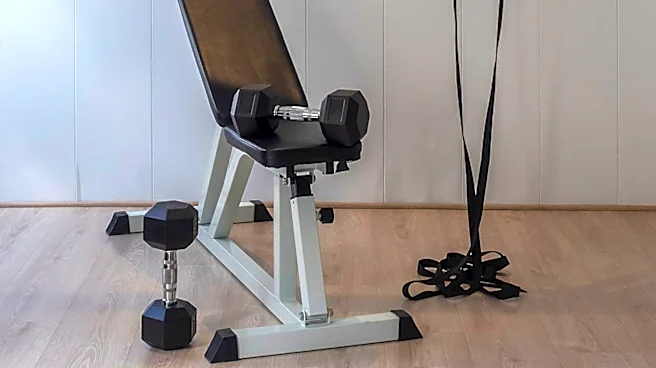
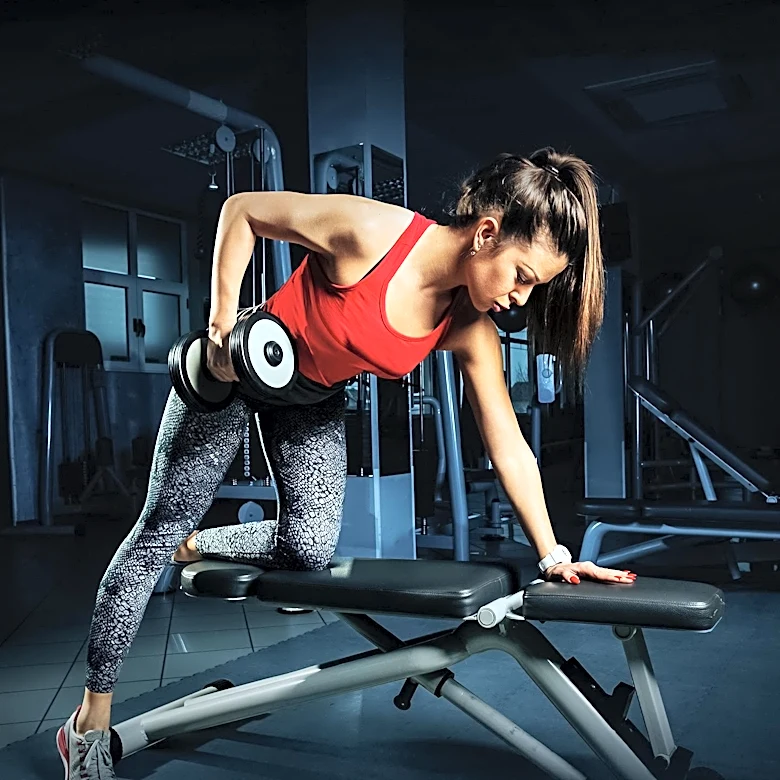
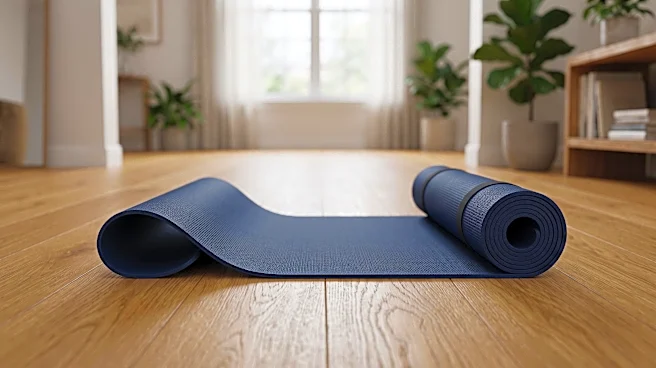
of every exercise. To start, individuals primarily need a small amount of floor space, comfortable clothing, and dedicated time. Bodyweight exercises are sufficient for beginners to build strength. For added variety, adjustable dumbbells or resistance bands are recommended as they offer numerous options without occupying much space. The guide advises a three-step approach: training the whole body rather than isolating muscle groups daily, focusing on fundamental movement patterns (push, pull, squat, hinge, core), and maintaining a manageable routine of two to three 30-45 minute sessions per week. Recommended beginner exercises include squats, push-ups, glute bridges, rows, and planks.
Why It's Important?
This guide is significant because it demystifies strength training, making it accessible to a broader audience who may be intimidated by gyms or perceive fitness as requiring expensive equipment. By emphasizing bodyweight exercises and minimal gear, it removes common barriers to entry, promoting physical activity among those with limited resources or time. The focus on full-body workouts and fundamental movements ensures a balanced development of strength, which is crucial for overall health and injury prevention. Encouraging consistency over intensity helps individuals build sustainable habits, leading to long-term health benefits. This approach can contribute to public health by empowering more people to engage in regular strength training, which is vital for bone density, metabolism, and functional independence as they age.
What's Next?
Individuals following this guide can expect to gradually increase their strength and confidence. As exercises become easier, the next step involves progressive overload, which means increasing the challenge by performing more repetitions, adding sets, using slightly heavier weights, slowing down movements, or choosing more difficult variations. Tracking workouts is recommended to monitor progress and determine when to advance. The guide suggests that home workouts can be combined with gym sessions as individuals seek more resistance or equipment options. Future developments for those on this path might include exploring more advanced bodyweight exercises, incorporating kettlebells, or transitioning to a gym environment for access to a wider range of equipment and heavier weights to continue their strength progression.
Beyond the Headlines
The emphasis on simplicity and consistency in home strength training has broader implications for how fitness is perceived and integrated into daily life. It challenges the commercialized image of fitness often associated with high-tech gyms and specialized gear, promoting a more pragmatic and sustainable approach. This shift can foster greater self-efficacy, as individuals learn they can achieve significant health improvements with minimal external dependencies. Ethically, it promotes inclusivity by making strength training accessible regardless of socioeconomic status or geographical location. Culturally, it could contribute to a normalization of physical activity as an integral, achievable part of everyday routine rather than a specialized pursuit, potentially leading to a healthier, more active population with reduced rates of lifestyle-related diseases.