



What's Happening?
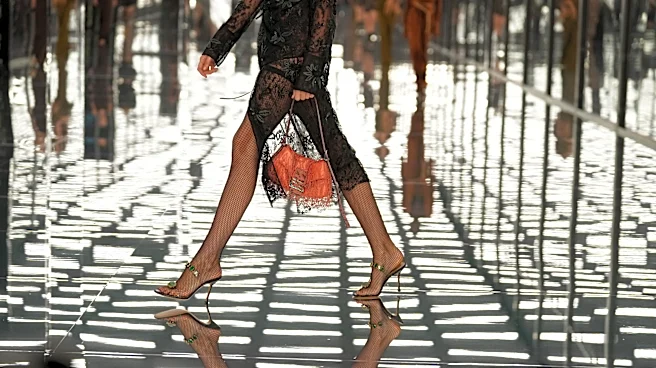
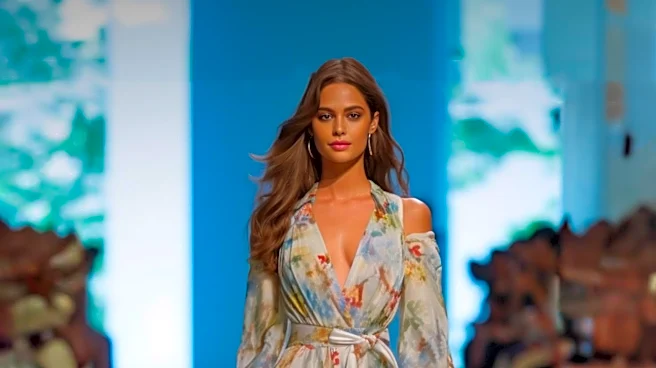
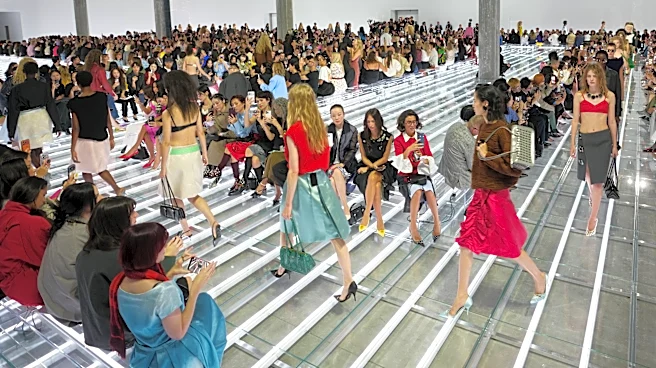
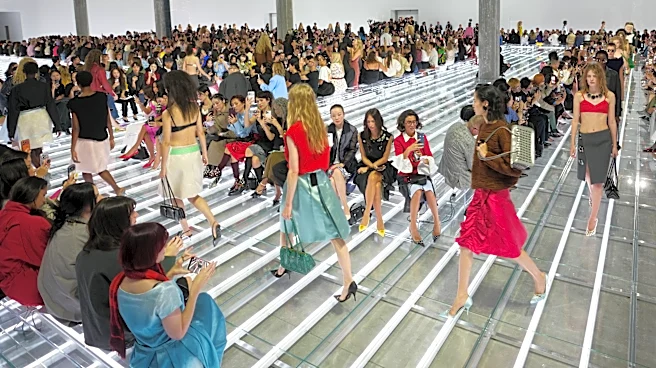
Roberto Cavalli showcased its Spring/Summer 2027 collection at Milan Fashion Week, under the creative direction of Fausto Puglisi. The collection marks a significant return to the brand's foundational aesthetic, emphasizing exuberant prints, bold contrasts,
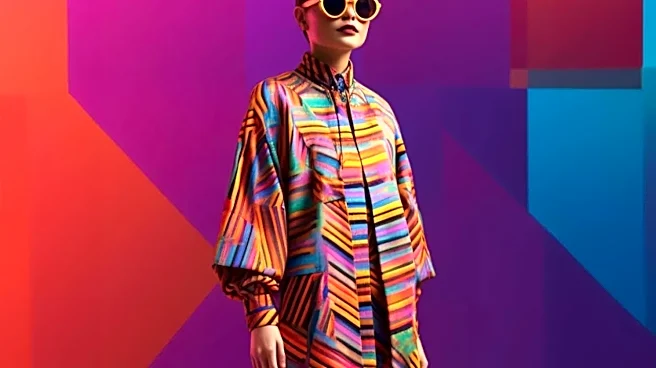
and a revival of its 2000s style. Puglisi's approach involves a deep dive into Cavalli's archives, focusing on the brand's historical expertise in textile printing and craftsmanship. The designs feature layered references, materials, and colors, blending animal patterns with large-scale flowers and ornamental motifs. Vibrant colors such as violet and emerald green are prominent, contributing to a bold, maximalist style that celebrates the carefree spirit of the early 2000s and the brand's heritage. The presentation itself aimed to recreate the atmosphere of past Cavalli shows, focusing on sensuality and visual power.
Why It's Important?
This collection is important as it signifies a strategic move by Roberto Cavalli to reconnect with its core identity and heritage, particularly its renowned craftsmanship in textile printing and leatherwork. In an industry often driven by rapid trends, Puglisi's decision to recover and reinterpret the brand's historical know-how, rather than simply recovering an archive, highlights the value of preserving traditional skills in fashion. This approach not only reinforces the brand's unique selling proposition but also contributes to the broader 'Made in Italy' legacy, which relies heavily on specialized craft. By emphasizing femininity, sensuality, and bold expression, the collection aims to resonate with consumers seeking distinctive and empowering fashion, potentially strengthening Cavalli's market position and influence in the luxury fashion sector. The focus on maximalism and vibrant aesthetics could also set new trends or reinforce existing ones within the global fashion landscape.
What's Next?
Following the Milan Fashion Week showcase, the Roberto Cavalli Spring/Summer 2027 collection will likely be featured in fashion editorials, retail campaigns, and celebrity endorsements, further solidifying its presence in the market. The brand's emphasis on its historical craftsmanship and distinctive aesthetic under Fausto Puglisi suggests a continued trajectory of leveraging its heritage for future collections. Industry observers will be watching to see how this renewed focus on maximalism and the 2000s aesthetic influences broader fashion trends and consumer demand. The success of this collection could also impact the brand's expansion strategies, potentially leading to new collaborations or market entries. Furthermore, the collection's reception will provide insights into the ongoing relevance of bold, print-heavy designs in the luxury fashion segment.
Beyond the Headlines
Beyond the immediate fashion trends, Roberto Cavalli's approach under Fausto Puglisi touches upon deeper cultural and economic implications. The deliberate effort to recover and celebrate the brand's original craftsmanship, particularly in textile printing, underscores the ongoing challenge of preserving specialized artisanal skills in an increasingly globalized and mass-produced fashion industry. This move can be seen as a statement on the importance of heritage and authenticity in luxury goods, potentially influencing other brands to look inward at their own historical strengths. Ethically, the collection's celebration of femininity and sensuality, without diminishing women, offers a counter-narrative to some contemporary fashion trends, promoting confidence and self-awareness. Economically, the success of such a heritage-driven strategy could bolster the 'Made in Italy' brand, attracting investment and talent to maintain high-quality production within Italy.