





What's Happening?
The U.S. beef industry is undergoing a significant shift with the rapid growth of the 'beef-on-dairy' model, a practice where dairy cows are bred with beef bulls to produce calves for meat. This trend is gaining momentum amidst a historic cattle shortage,
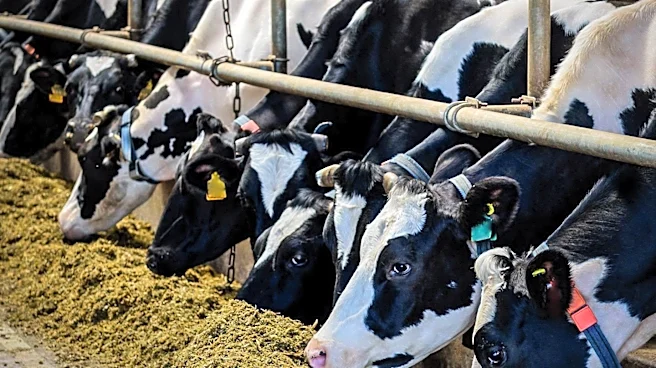
with the U.S. total cattle inventory at its lowest since 1951. Beef-on-dairy calf production surged from 50,000 head in 2014 to 3.22 million in 2024, now accounting for an estimated 26% of the feedlot population. Large operations like Blackshirt Feeders in Nebraska, set to be the country's largest feedlot, primarily house beef-on-dairy cattle. This model involves separating calves from their mothers shortly after birth, raising them in confined hutches, and feeding them grain-based diets, a stark contrast to traditional ranching. While it helps ease the cattle shortage, it raises concerns among independent ranchers about the potential for vertical integration of the beef industry, similar to the poultry and pork sectors.
Why It's Important?
The rise of the 'beef-on-dairy' model has profound implications for the U.S. beef industry, potentially reshaping its structure and challenging the traditional role of independent ranchers. This shift towards a more industrialized, confinement-based system could lead to greater vertical integration, where large meatpackers and companies gain more control over the entire supply chain, from breeding to processing. This could erode the open cash market for cattle, reducing leverage for independent ranchers and potentially driving them out of business. Furthermore, the model raises significant animal welfare concerns, as beef-on-dairy cattle often experience different living conditions and are more prone to health issues like congestive heart failure, lameness, and liver abscesses due to intensive genetic selection and high-grain diets. The environmental impact of large feedlots, such as water consumption and manure generation, also presents a critical challenge.
What's Next?
The beef-on-dairy model is expected to continue its growth, with major players like Cargill and Land O'Lakes investing in programs and products to accelerate its adoption. While experts like Tara Felix from Penn State believe beef-on-dairy will not entirely replace traditional ranching due to the limited dairy cow population, she anticipates a move towards a more integrated model within the beef-on-dairy sector. Companies like Walmart are also strengthening their supply chain control by opening their own processing plants. The industry will likely face increasing scrutiny regarding animal welfare practices and environmental impact associated with large-scale confinement operations. Independent ranchers and advocacy groups like R-CALF USA will continue to advocate for policies that protect their independence and promote a more competitive market structure, potentially leading to ongoing debates about the future of beef production in the U.S.
Beyond the Headlines
The transformation of the U.S. beef industry through the 'beef-on-dairy' model reflects broader trends in industrial agriculture, where efficiency and scale often take precedence. This shift challenges the romanticized image of the American rancher and raises fundamental questions about the sustainability and ethics of food production. The potential for increased vertical integration could lead to a more consolidated industry, impacting consumer choices, pricing, and the economic viability of rural communities dependent on independent ranching. The health issues observed in beef-on-dairy cattle, such as lameness and liver abscesses, highlight the tension between maximizing production and ensuring animal well-being. This development also underscores the influence of genetic selection and feedlot practices on animal health and the overall quality of the beef supply, prompting a deeper examination of the long-term consequences for both animals and consumers.