








What's Happening?
WattEV, a leading provider of heavy-duty electrification services, has inaugurated its eighth heavy-duty electric truck charging depot in California, located at the Port of Oakland. This new facility marks Northern California's first public depot for electric trucks.
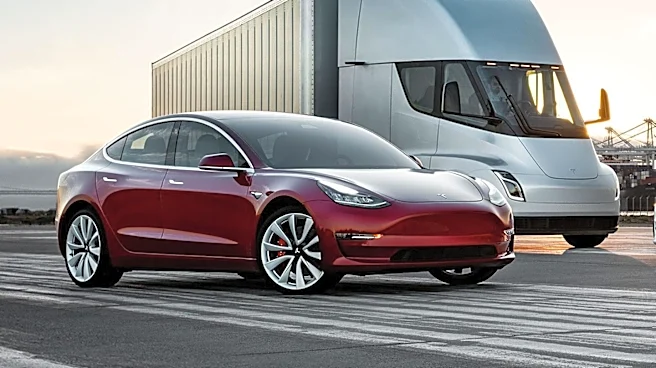
Concurrently, WattEV has introduced the initial units of a large fleet of electric Tesla Semi trucks. These trucks are intended to establish a zero-emission freight corridor connecting the Port of Oakland to various destinations across the Bay Area, Northern California, Sacramento, Central California, and Nevada. A key benefit highlighted is that the per-mile energy cost for these electric big rigs is currently less than that of comparable diesel trucks. The depot is designed for megawatt charging, capable of charging 25 medium- and heavy-duty electric trucks concurrently at up to 240KW each, or seven trucks at 1.2 MW, reducing charging times to 30 minutes or less.
Why It's Important?
This development is crucial for the U.S. freight transport industry and California's environmental goals. The opening of WattEV's Port of Oakland charging depot and the deployment of electric Tesla Semis represent a significant step towards decarbonizing the logistics sector. By offering cost parity with diesel trucks, electric freight transport becomes a more viable and attractive option for trucking companies, potentially accelerating the transition away from fossil fuels. This initiative directly supports California's zero-emission policy goals and aims to improve air quality in communities near major ports and freight corridors, such as West and East Oakland. The expansion of charging infrastructure beyond Southern California addresses a critical need for broader adoption of electric heavy-duty vehicles, impacting supply chains and regional economies by fostering cleaner, more sustainable operations.
What's Next?
The Port of Oakland project is expected to lead the electrification efforts at the port as it approaches its centennial. Over 300 electric Semis are planned to establish a zero-emission freight corridor, expanding clean transport options from the Bay Area to other key regions. WattEV plans to continue expanding its network of charging depots, building on its existing seven locations across California. The success of this project could serve as a model for other ports and freight hubs nationwide, encouraging further investment in electric vehicle infrastructure and fleets. Collaboration between companies like WattEV, port authorities, and energy providers such as PG&E, utilizing programs like Flex Connect, will be essential for scaling these initiatives and achieving broader environmental and economic benefits.
Beyond the Headlines
The transition to electric heavy-duty trucks at major U.S. ports like Oakland has profound implications beyond immediate environmental benefits. It signifies a broader shift in industrial logistics, potentially reshaping energy demands, infrastructure development, and labor markets. The reduced per-mile energy cost for electric trucks could lead to long-term operational savings for freight companies, influencing pricing structures and competitive landscapes within the trucking industry. Furthermore, the development of megawatt charging technology and infrastructure highlights the innovative engineering required to support large-scale electrification. This move also underscores the increasing pressure on industries to adopt sustainable practices, driven by both regulatory mandates and consumer demand for environmentally responsible supply chains, potentially setting new standards for corporate responsibility and technological adoption in the transportation sector.