








What's Happening?
Post-menopausal women are strongly encouraged to incorporate strength training into their routines to combat age-related muscle and bone loss, according to recent health recommendations. A systematic review of resistance training in postmenopausal women revealed
significant improvements in bone mineral density across key areas such as the lumbar spine, femoral neck, and total hip. This is crucial as women often enter later life with less muscle and bone reserve, and declining estrogen levels during menopause accelerate bone loss. The World Health Organization (WHO) advises muscle-strengthening activities for all major muscle groups at least two days a week, emphasizing varied activities that enhance both strength and balance to maintain function and prevent falls. While strength training supports muscle, bone, and physical function, it does not replace estrogen or reliably alleviate menopause symptoms like hot flashes or sleep disruption. The primary goal is to build a stronger physical foundation as the body undergoes changes.
Why It's Important?
The emphasis on strength training for post-menopausal women is vital for public health, particularly in the U.S., where an aging population faces increased risks of osteoporosis and related fractures. The International Osteoporosis Foundation estimates that one in three women over 50 will experience an osteoporosis-related fracture, a significantly higher rate than men. By engaging in regular strength training, women can mitigate bone density loss, improve muscle strength, and enhance balance, thereby reducing the likelihood of falls and subsequent fractures. This proactive approach can lead to greater independence and a higher quality of life in older age, potentially reducing the burden on healthcare systems associated with treating fall-related injuries and long-term care. Furthermore, improved physical function allows individuals to perform daily tasks more easily, fostering continued engagement in social and community activities.
What's Next?
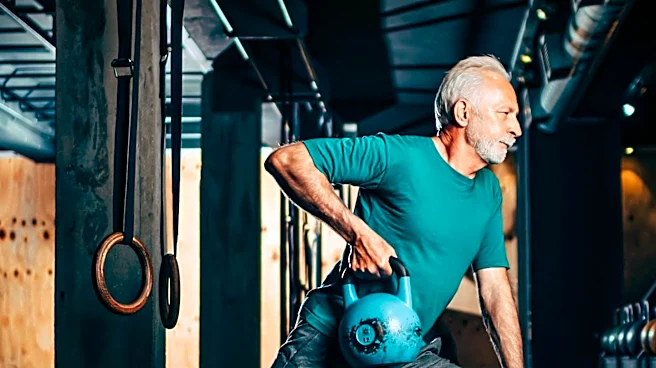
Healthcare providers and fitness professionals are expected to increasingly advocate for tailored strength training programs for post-menopausal women. The recommendation is to aim for two strength sessions per week, focusing on major muscle groups through exercises like squats, hip hinges, rows, and presses. These routines should be adapted to individual experience and equipment availability, with a focus on consistency over lifting the heaviest weights. Additionally, balance work, such as tai chi or single-leg stands, should be integrated. Public health campaigns may also highlight the importance of combining resistance training with aerobic activities, adequate recovery, and nutritious meals. Women experiencing menopause symptoms or health conditions affecting exercise capacity are advised to seek guidance from qualified healthcare professionals to ensure safe and effective participation.
Beyond the Headlines
Beyond the immediate health benefits, the push for strength training in post-menopausal women reflects a broader shift in understanding healthy aging. It moves beyond simply managing symptoms to actively building resilience and functional capacity. This approach challenges traditional views of aging as a period of inevitable decline, promoting a more proactive and empowering perspective. Ethically, it underscores the importance of accessible and tailored fitness guidance for all age groups, recognizing that generic exercise advice may not meet the specific physiological needs of women in this life stage. Culturally, it could contribute to a greater acceptance and normalization of women engaging in strength-building activities, potentially breaking down stereotypes about appropriate exercise for older women and fostering a more inclusive fitness landscape.