








What's Happening?
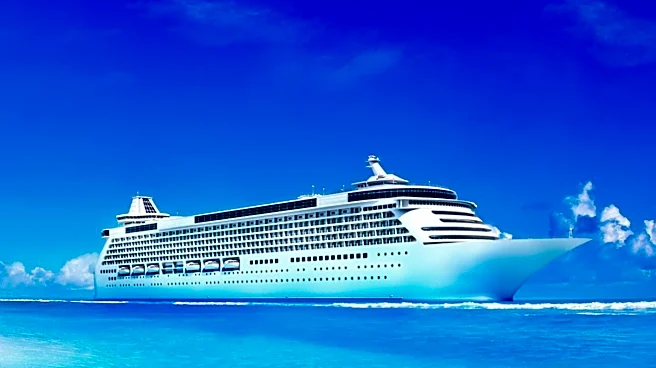
Royal Caribbean International has launched its newest ship, Legend of the Seas, the third in its Icon Class series. The ship, which follows the Icon and Star of the Seas, is set to initially sail in the Mediterranean before transitioning to the Caribbean in the fall.
Legend of the Seas features a range of new entertainment options, including a sea-adapted version of the Broadway musical 'Charlie and the Chocolate Factory' and an AquaTheater show titled 'Shockwave'. The ship also introduces the Hollywoodland Supper Club, which offers a dining experience reminiscent of Old Hollywood, and 'Fusion', an ice show that incorporates the four classical elements. Additionally, the ship includes the Royal Railway dining experience, which features a Silk Routes story inspired by Marco Polo's travels.
Why It's Important?
The introduction of Legend of the Seas highlights Royal Caribbean's continued investment in enhancing the cruise experience through innovative entertainment and dining options. This development is significant for the cruise industry as it seeks to attract a diverse range of passengers, including families and multi-generational groups. The ship's unique offerings, such as the immersive train car dining experience and the adaptation of popular cultural themes like 'Charlie and the Chocolate Factory', are designed to provide memorable experiences that differentiate Royal Caribbean from its competitors. This could potentially lead to increased bookings and customer loyalty, benefiting the company's market position and financial performance.
What's Next?
Legend of the Seas will spend its initial months sailing in the Mediterranean, visiting ports such as Naples, Marseille, and Barcelona. In the fall, the ship will relocate to the Caribbean, offering new itineraries and experiences to passengers. As the cruise industry continues to recover from the impacts of the pandemic, Royal Caribbean's strategic deployment of Legend of the Seas in these popular regions may help boost tourism and economic activity in the ports it visits. The success of this ship could influence future designs and offerings in the cruise industry, encouraging other companies to innovate similarly.