





What's Happening?
Bayer Crop Science has partnered with U.S.-based biotechnology company Switch Bioworks to develop biological products for agriculture, with an initial focus on biological nitrogen fixation. This collaboration aims to improve crop nutrition and decrease
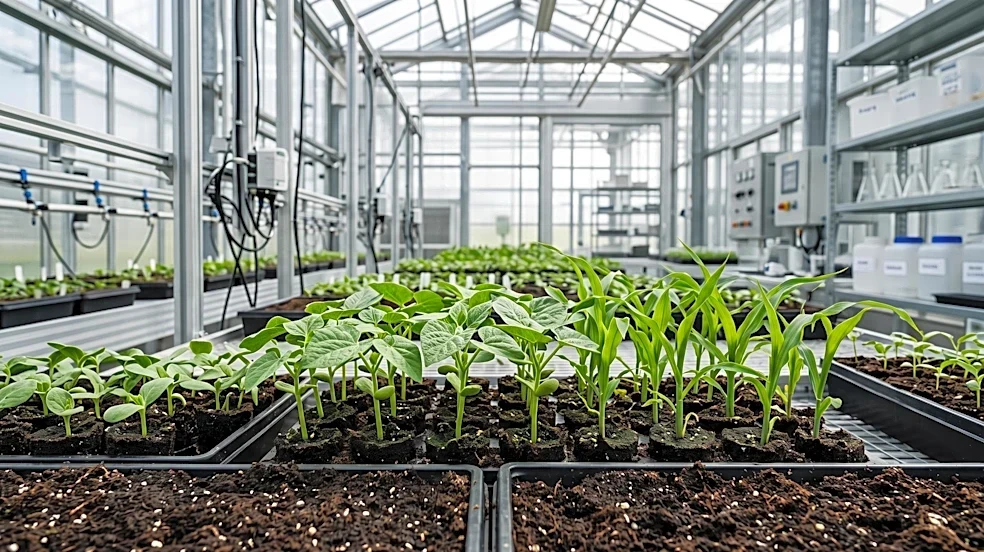
reliance on conventional nitrogen fertilizers. Switch Bioworks' technology utilizes genetically engineered microbes, originally developed at Stanford University, designed to establish themselves on plant roots before activating nitrogen production. Grow-room studies conducted by Switch Bioworks reportedly showed these programmed microbes produced five times more nitrogen than control strains designed for continuous nitrogen production. The technology seeks to overcome technical challenges in developing microbes that can effectively establish on plant roots and produce sufficient nitrogen for crops. Field trials for this engineered microbial fertilizer are currently underway at multiple sites across the U.S. Midwest, following authorization from the USDA and EPA.
Why It's Important?
This collaboration is significant for U.S. agriculture as it addresses the growing need for sustainable and efficient crop nutrition solutions. Reducing reliance on conventional nitrogen fertilizers can lead to environmental benefits, such as decreased greenhouse gas emissions and reduced water pollution from runoff. For farmers, this technology could offer more options to manage unpredictable conditions, optimize crop nutrition programs, and potentially lower input costs. The development of effective biological nitrogen fixation products could also contribute to more resilient and responsible food systems, aligning with increasing consumer expectations. The success of these field trials will be crucial in determining the technology's commercial viability and its potential to transform agricultural practices in the U.S. and beyond.
What's Next?
The immediate next step involves continued field trials across the U.S. Midwest to assess the performance of Switch Bioworks' engineered microbial fertilizer under real agricultural conditions. The commercial application of this technology will depend heavily on these results, demonstrating consistent performance and tangible benefits for growers. Regulatory approvals will also be a key factor for widespread adoption. If successful, the collaboration could lead to the development and commercialization of new biological products that offer farmers an alternative to traditional synthetic fertilizers. Bayer Crop Science will leverage its expertise in product development, formulation, field testing, and commercialization to bring these innovations to market, while Switch Bioworks will continue to advance its genetic switch technology, which is protected by seven patent families.
Beyond the Headlines
The partnership between Bayer Crop Science and Switch Bioworks highlights a broader trend in agriculture towards biological solutions and sustainable farming practices. This shift is driven by environmental concerns, regulatory pressures, and the economic challenges faced by farmers due to rising input costs. The genetic switch technology, if proven effective, could represent a paradigm shift in how crops obtain essential nutrients, potentially reducing the environmental footprint of agriculture. Beyond nitrogen fixation, Switch Bioworks is also exploring applications of its technology in energy, industrial biotechnology, and human health microbiome research, indicating the wide-ranging potential of programmable biology. The success of such innovations could foster greater trust in biological products, which has historically been a barrier to adoption in the agricultural sector.