





What's Happening?
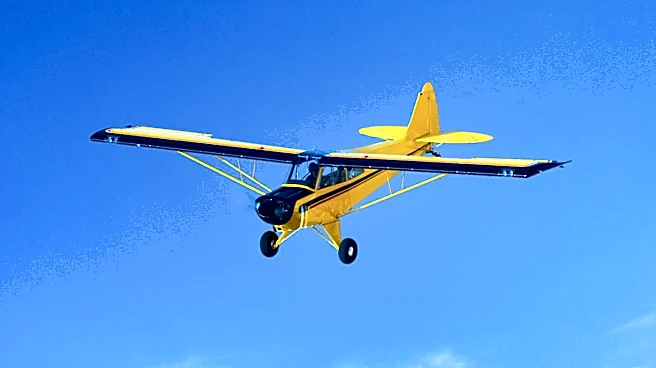
Henry Hoff, an 11-year-old boy from Algonquin, Illinois, successfully piloted a Beechcraft Sundowner airplane during his first flight lesson. His parents gifted him the experience through Executive Flight School's 'Love to Fly' program. With a certified
flight instructor and his father present, Henry taxied the aircraft at Chicago Executive Airport, participated in the takeoff, controlled the plane during the flight, and managed the landing approach. While the instructor assisted with rudder pedals during takeoff and made some corrective inputs during landing, Henry handled a significant portion of the flying himself. This experience marks a significant step in Henry's aviation aspirations, which began in 2021 when his father bought him a flight simulator, on which he has already accumulated between 750 and 800 hours of practice.
Why It's Important?
This event highlights the growing interest in aviation among young individuals and the importance of early exposure to STEM fields. For Henry, this hands-on experience could solidify his ambition to pursue a career as an Air Force pilot, demonstrating how early practical engagement can shape future professional paths. For the aviation industry, fostering such early interest is crucial for developing the next generation of pilots, engineers, and aviation professionals, addressing potential future workforce shortages. Programs like 'Love to Fly' play a vital role in making aviation accessible and inspiring to younger demographics, potentially broadening the talent pool for a critical sector. It also underscores the value of parental support and investment in children's passions, providing unique opportunities for skill development and career exploration.
What's Next?
Henry Hoff plans to continue pursuing his passion for aviation, with aspirations of becoming an Air Force pilot. His extensive practice on a flight simulator suggests a dedicated approach to mastering the skills required for flying. It is likely that he will continue with flight lessons, gradually building his experience and knowledge under the guidance of certified instructors. His journey could serve as an inspiration for other young individuals interested in aviation, potentially encouraging more flight schools to offer similar introductory programs. As he progresses, Henry will face the rigorous training and educational requirements necessary to achieve his goal of becoming a military pilot, a path that demands significant commitment and skill development over many years.
Beyond the Headlines
Beyond the personal achievement, Henry's story touches on broader themes of youth development, skill acquisition, and the future of specialized industries. His early and intense engagement with a flight simulator demonstrates the power of technology in fostering complex skills from a young age, blurring the lines between play and serious training. This also raises questions about how educational systems and industries can better leverage such tools to identify and nurture talent. Furthermore, his ambition to join the Air Force speaks to the enduring appeal of military service and the role of aviation in national defense. His journey could become a case study in how early, immersive experiences can lead to profound career aspirations and contribute to the pipeline of skilled professionals in critical sectors.