







What's Happening?
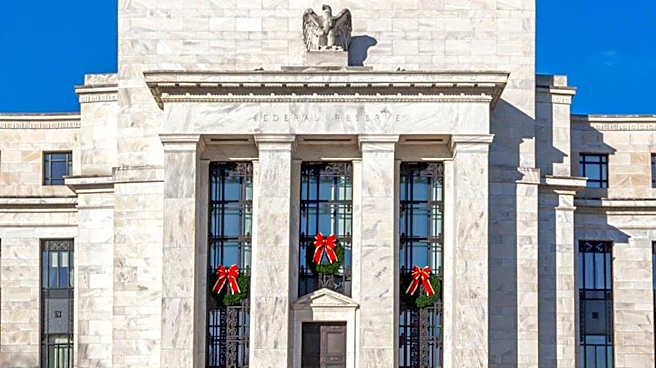
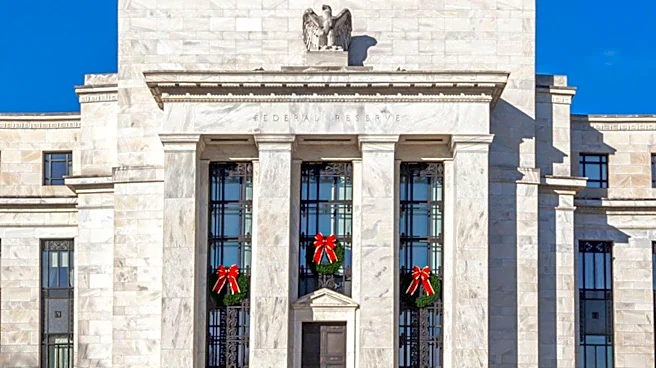
The Federal Reserve has revised its quarterly assessment of the financial system to include a new private credit sector, providing a more comprehensive view of corporate lending in the U.S. economy. This addition addresses a previous gap in data, as private credit,
defined as privately negotiated lending by nonbank investment funds, has grown dramatically from just over $100 billion in 2012 to approximately $1.5 trillion by the end of 2025. This growth significantly outpaces the more moderate increase in bank commercial and industrial (C&I) lending over the same period. The rapid expansion of private credit is partly attributed to stricter bank regulations implemented after the 2008 financial crisis, which made it more challenging for banks to lend to smaller, riskier firms. Consequently, private credit has increasingly filled this void, taking on a larger role in financing highly leveraged firms.
Why It's Important?
The integration of private credit data into the Federal Reserve's Financial Accounts is crucial for policymakers, researchers, and market participants. It reveals that the nonbank lending sector is larger than previously recognized, altering the understanding of banks' role in providing credit to the economy. The updated data show that banks' share of total lending has declined further than previously estimated, highlighting a significant shift in the financial landscape. This development has implications for financial stability, as a rapidly growing nonbank sector may present new risks that require careful monitoring. Understanding the scale and interlinkage between private credit and the banking sector is essential for assessing potential systemic vulnerabilities and for formulating effective regulatory policies to ensure the stability of the broader financial system.
What's Next?
With the new data, policymakers are expected to intensify their focus on the private credit sector to better understand its evolution and potential implications for economic and financial stability. The Federal Reserve and other regulatory bodies will likely use this enhanced data to assess the risks associated with the growth of nonbank lending, particularly concerning its connections to the banking system. While bank lending to private credit vehicles is currently modest and often secured by collateral, providing liquidity, ongoing monitoring will be necessary. Future policy discussions may revolve around potential regulatory frameworks for private credit to mitigate any emerging risks, ensuring that this rapidly expanding sector contributes positively to the economy without undermining financial stability. Researchers will also have a more robust dataset to analyze the impact of private credit on corporate finance and economic growth.
Beyond the Headlines
The rise of private credit signifies a fundamental transformation in how businesses, particularly midsize companies, access capital in the U.S. economy. This shift challenges traditional notions of financial intermediation, where banks were the primary lenders. The ethical implications include questions about transparency and oversight in a less regulated lending environment, potentially affecting borrower protections and market fairness. Culturally, it reflects an increasing appetite for alternative investment strategies and a diversification of financial power beyond conventional banking institutions. Long-term, this trend could lead to a more fragmented yet potentially more resilient financial system, provided that appropriate regulatory adjustments are made to address the unique risks and opportunities presented by a robust private credit market. It also highlights the dynamic interplay between regulation and market innovation, where stricter rules in one area can spur growth in another.