
What's Happening?
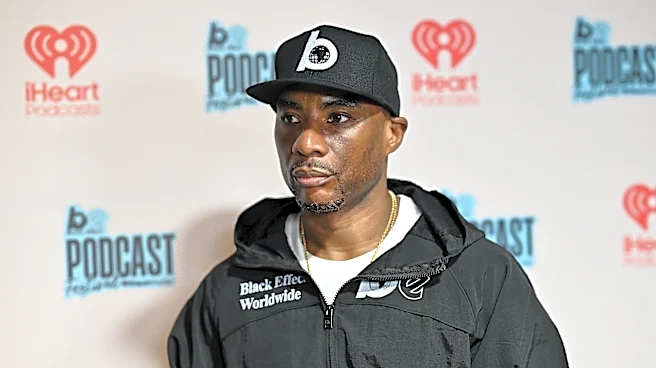
Radio host Charlamagne Tha God has publicly criticized comedian Dave Chappelle for comments made during his 'Karmageddon' tour regarding the assassination of Turning Point USA founder Charlie Kirk. A video
from Chappelle's Madison Square Garden performance, despite a venue ban on cell phones, surfaced online showing the comedian discussing Kirk's death. In the clip, Chappelle admitted to feeling better after learning about the assassination and recalled being in a good mood before remembering the reason. Charlamagne Tha God addressed this on his radio show, 'The Breakfast Club,' stating he found no humor in someone's death, especially when political disagreements can escalate to violence. He emphasized that he would not wish such violence on anyone, regardless of their beliefs, and highlighted that public figures can become targets due to their opinions. While acknowledging that the viral recording might not capture the full context of Chappelle's performance, Charlamagne based his criticism on the portion played, where Chappelle appeared to express feeling better after Kirk's death. Turning Point USA and Kirk's widow, Erika Kirk, also condemned Chappelle's remarks, with Erika calling it 'disgusting' to make the destruction of human life a punchline.
Why It's Important?
This incident highlights the ongoing debate surrounding the boundaries of comedic expression, particularly when it involves sensitive topics like political violence and death. Charlamagne Tha God's criticism, coming from a prominent media personality, underscores a societal discomfort with humor that appears to celebrate or condone violence, even in a comedic context. The reaction from Turning Point USA and Erika Kirk further emphasizes the pain and offense caused when such events are trivialized. This situation also brings to light the challenges faced by comedians in an era of instant social media dissemination, where snippets of performances can be taken out of context or judged without the full scope of the artistic intent. It raises questions about the responsibility of public figures, whether comedians or commentators, to consider the impact of their words, especially in a politically charged environment where rhetoric can be perceived as inciting or normalizing violence. The controversy reflects a broader cultural tension between freedom of speech and the potential for speech to cause harm or offense, particularly when it touches upon deeply divisive political figures and tragic events.
What's Next?
The immediate aftermath of this controversy will likely involve continued public discussion and debate across social media and news outlets regarding Dave Chappelle's comments and Charlamagne Tha God's critique. Chappelle's team or Chappelle himself may choose to address the controversy directly, either to clarify his remarks, offer an apology, or defend his comedic approach. Similarly, other public figures and commentators may weigh in, further polarizing opinions on the matter. The incident could also influence how venues enforce cell phone bans during performances, as unauthorized recordings continue to fuel such controversies. For Turning Point USA and Erika Kirk, their public condemnation serves as a statement against the perceived trivialization of Charlie Kirk's death, and they may continue to advocate for respectful discourse surrounding political violence. Ultimately, this event contributes to the ongoing cultural conversation about the role of comedy in society, the limits of free expression, and the impact of public figures' words in a sensitive political climate.
Beyond the Headlines
This controversy delves into the ethical dimensions of humor and the societal implications of how we process tragic events, especially those with political undertones. Chappelle's joke, regardless of its intent, touches upon the complex human reaction to the death of figures perceived as adversaries. While comedy often pushes boundaries and challenges norms, there's a fine line between provocative humor and perceived insensitivity or endorsement of violence. The public's reaction, as exemplified by Charlamagne Tha God's critique, reflects a collective grappling with how to mourn, condemn, or even react to the death of individuals whose ideologies are deeply divisive. This incident also highlights the 'cancel culture' debate, where public figures face intense scrutiny and potential backlash for controversial statements. It forces a deeper examination of whether certain topics should be off-limits for comedy, or if all subjects are fair game, provided the humor is skillfully executed. The differing perspectives underscore a fundamental disagreement on the role of art and entertainment in processing societal trauma and political polarization.