


What's Happening?
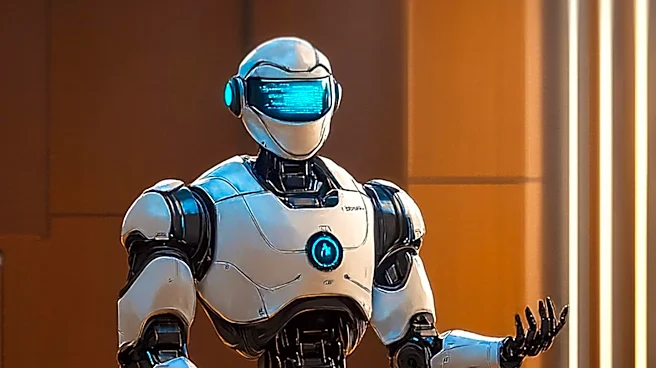
Xpeng, a Chinese electric vehicle company, has unveiled its latest general-purpose humanoid robot named 'Iron.' The company plans to begin mass production of Iron in January, with sales commencing in the second quarter of next year and deliveries expected
later in 2027. Initially, Iron will be trained as a store assistant in Xpeng's retail car locations starting in the first quarter of 2027. Brian Gu, co-president of Xpeng, indicated that after successful deployment in commercial settings, household applications for the robot could be realized within one to two years. Xpeng, founded in 2014, has previously developed its own artificial intelligence chips and expanded into personal flying vehicles and robotics. The robotics unit recently raised $900 million at a $6.3 billion valuation in its first funding round, led by IDG Capital. The company also announced its 'Turing Physical AI Architecture' for controlling cars and humanoids using AI and real-time decision-making technology.
Why It's Important?
The introduction of Xpeng's humanoid robot 'Iron' signifies a significant step in the advancement and commercialization of robotics, potentially impacting various sectors in the U.S. and globally. While Xpeng is a Chinese company, its innovations contribute to the global robotics landscape, pushing the boundaries of what humanoid robots can achieve. The planned deployment of Iron in retail settings could set a precedent for how businesses integrate advanced AI and robotics into customer service and operational roles, potentially influencing U.S. retail strategies. Furthermore, the long-term vision of household applications for these robots could transform daily life, creating new markets for domestic robotics and altering labor dynamics. The development of Xpeng's 'Turing Physical AI Architecture' also highlights the increasing sophistication of AI in controlling complex machines, which could spur further research and development in AI and robotics across industries, including those in the U.S.
What's Next?
Xpeng plans to initiate mass production of its humanoid robot 'Iron' in January, followed by sales in the second quarter and deliveries later in 2027. The immediate next step involves training Iron as a store assistant in Xpeng's retail car locations, starting in the first quarter of 2027. Brian Gu, co-president of Xpeng, anticipates that if commercial deployment is successful, the robot could be adapted for household use within one to two years. The company also expects to attract more investors following Iron's commercial launch. The success of Iron in commercial settings will be a crucial indicator of its broader market potential and could influence the pace of humanoid robot adoption in other industries and regions. The ongoing development of Xpeng's AI architecture will also be key to enhancing the robot's capabilities and adaptability.
Beyond the Headlines
The emergence of advanced humanoid robots like Xpeng's 'Iron' raises deeper implications beyond immediate commercial applications. The potential for robots to perform household chores within a few years could lead to significant societal shifts, impacting domestic labor, leisure time, and the very structure of homes. Ethical considerations regarding human-robot interaction, data privacy, and the potential displacement of human workers in various service sectors will become increasingly prominent. The development also highlights the ongoing technological competition between nations, particularly in AI and robotics, with implications for global innovation leadership and economic power. The ability of Xpeng to develop its own AI chips for robotics, despite U.S. restrictions on advanced Nvidia chip sales to China, underscores the resilience and self-sufficiency efforts within the Chinese tech industry, potentially influencing future international technology policies and supply chains.